
ACL Injury Recovery: An Honest Timeline From Injury to Return
MBM (Mind Body Motion) Physiotherapy · 20 August 2026 · 4 min read
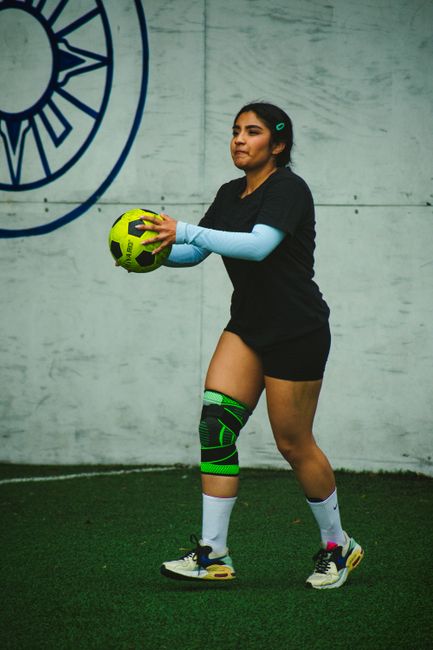
What actually tears, and why the knee gives way
An anterior cruciate ligament does not heal the way a muscle does. This short, cord-like ligament in the centre of the knee stops the shin bone sliding forward and controls rotation, and it usually tears in a moment of twisting — a football sidestep, a badminton lunge, a two-wheeler skid, a bad landing from a jump. Because the ACL lives inside the joint, bathed in fluid rather than blood-rich tissue, a full tear cannot knit itself back together, which is why this injury behaves so differently from a sprain elsewhere.
The classic story is a pop felt or heard, swelling that balloons within hours, and later a knee that feels untrustworthy — buckling on turns even when pain has gone. That instability, not the pain, is the real problem, because each giving-way episode risks damaging the meniscus and cartilage that decide the joint's long-term health.
Surgery or not: an honest fork in the road
Not every torn ACL needs an operation. People whose lives involve straight-line activities — walking, cycling, swimming, gym work — often function fully with a rehabilitated but unreconstructed knee, and structured rehabilitation alone gives some tears a stable outcome. Reconstruction, which replaces the ligament with a graft of your own tendon, earns its place for people returning to pivoting sports, for knees that keep giving way despite good rehab, and for tears combined with repairable meniscus damage.
Either road runs through the same country: months of progressive strengthening. Surgery without serious rehab produces a stable ligament inside a weak, hesitant leg, and that combination re-injures. Discuss the decision with an orthopaedic surgeon and a physiotherapist together.
Weeks zero to two: calm the knee, wake the quadriceps
Whether pre-surgery or immediately post-injury, the first fortnight has three jobs: control swelling with elevation and icing (fifteen to twenty minutes, a few times daily, cloth between ice and skin), regain full straightening, and stop the quadriceps switching off. Full extension is the milestone people underestimate — a knee that loses its last few degrees of straightening early can stay stiff for months, so time lying with the heel propped on a rolled towel, letting gravity straighten the joint for ten minutes several times a day, is genuinely therapeutic.
Quad sets anchor the muscle work: press the back of the knee into a towel, hold five to ten seconds, twenty repetitions, several times daily, watching the kneecap draw upward. Add straight-leg raises once you can lift without the knee sagging into a bend. Walking follows the weight-bearing advice of your surgical team; unoperated knees usually walk as tolerated, with crutches only while the limp is significant.
Months one to three: rebuild the engine
This phase trades the swollen, cautious knee for a strong one. Stationary cycling begins once the knee bends past about one hundred degrees, and strengthening progresses through closed-chain work — leg presses, mini squats to forty-five degrees, step-ups onto a low step, bridges — at two to three sets of eight to twelve, three days a week, with weight added when the top of the range feels manageable. Hamstring work matters doubly, since the hamstrings actively back up the ACL's job of restraining the shin.
The feel-versus-fear rule for the whole phase: muscle burn and mild ache that settles by next morning are productive; sharp pain, swelling that returns, or warmth around the joint mean the dose outran the tissue. Balance work starts here too — single-leg standing progressing to unstable surfaces — because the injury also damaged the knee's position sensors.
Months three to nine: from gym strength to game speed
Around months three to four, straight-line jogging returns once the leg passes practical tests: comfortable single-leg squats, no swelling after exercise, and quadriceps strength approaching seventy percent of the other side. Months four to six layer in agility — ladder drills, gentle direction changes, hopping progressions — always sub-maximal before maximal, always assessed by how the knee responds the next day.
Full return to pivoting sport belongs at nine months or later, not the six months older protocols promised. The graft itself takes most of a year to biologically mature, and testing shows movement quality and strength continue improving well past month six; returning early multiplies re-tear risk, especially in athletes under twenty-five. The gatekeeping should be tests, not the calendar alone: hop tests within ninety percent of the uninjured leg, near-symmetrical strength, and confidence under fatigue.
The habits that decide year five, not just month nine
An ACL injury raises the long-term risk of arthritis in that knee regardless of treatment, and the levers that lower it are unglamorous: keep the thigh and hip strong permanently, keep body weight in a healthy range — every extra kilogram (2.2 lb) multiplies through the joint with each step — and keep landing mechanics sharp with ongoing jump-and-land practice if you play sport. Twice-weekly strength maintenance is a small tax for a knee that lasts.
Expect psychological aftershocks too. Hesitancy, protective limping and fear of re-injury are near-universal and respond to graded exposure — practising the feared movement in progressively realistic doses — just as muscles respond to graded load.
Red flags at any stage of ACL recovery
Seek prompt review for a calf that becomes swollen, hot and tender — particularly in the weeks after surgery, when a blood clot is possible — or for fever with a hot, increasingly painful joint, which can signal infection. A knee that locks solid and will not straighten may have a displaced meniscus fragment and needs assessment rather than forcing. And recurrent giving-way episodes during rehabilitation are a message to revisit the plan with your surgeon and physiotherapist, because each buckle gambles with cartilage the joint cannot regrow.
Questions patients ask
Can an ACL tear heal without surgery?
A completely torn ACL does not reattach itself, but many people achieve a stable, fully functional knee through structured rehabilitation alone, and some partial tears do stabilise. The choice depends on your sport, your instability episodes and any meniscus damage — decide with a surgeon and physiotherapist together.
When can I ride a two-wheeler or drive after ACL injury?
Typically when you can bend the knee comfortably past ninety degrees, bear full weight without a limp, and brake sharply without hesitation — often four to six weeks after surgery for the left leg, longer for the right or for gear-shift riding. Confirm with your surgeon, as protocols differ.
Why do surgeons now say nine months instead of six?
The graft takes close to a year to regain strength, and studies show re-tear risk drops substantially when return to pivoting sport waits until at least nine months with strength and hop tests passed. Six months suits gym life, not game speed.
Suggested articles

Hip Pain From Sitting: Why Desk Years Show Up in Your Hips
Long sitting shortens hip flexors, starves glutes and irritates deep hip tissue. Where sitting hip pain comes from and the routine that reverses it.
24 August 2026 · 4 min read
Wrist Pain at the Keyboard: Carpal Tunnel, RSI and What Helps
Not all keyboard wrist pain is carpal tunnel. How to tell nerve from tendon trouble, night splints, glides, desk fixes and when to get tested.
23 August 2026 · 4 min read
Calf Strain: From First Limp to Full Stride
A pulled calf heals in stages, not by rest alone. Grades explained, week-by-week loading from heel raises to running, and the re-tear traps to avoid.
22 August 2026 · 4 min read