
Knee Pain: A Structured Recovery Plan That Avoids Surgery for Most
MBM (Mind Body Motion) Physiotherapy · 4 July 2026 · 3 min read
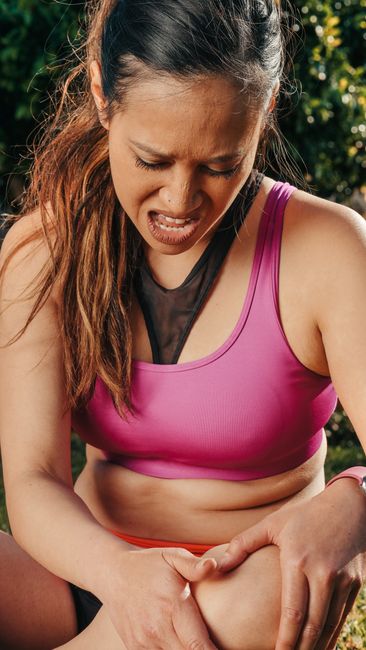
Most aching knees do not need an operation
Knees that hurt on stairs, after long sitting, or during squatting are usually suffering from overload — the demand on the joint has outrun the strength of the muscles protecting it — rather than damage that a surgeon must fix. The thigh and hip muscles are the knee's shock absorbers; when they weaken through desk years or a period of inactivity, forces that muscle should soak up pass into the joint surfaces and irritate them. Rebuild the absorbers and most knees quieten. That is the entire logic of the plan below, and it is why exercise, not rest, is the first-line treatment worldwide for common knee pain.
Phase one, weeks one to two: calming an irritable joint
Start by finding your tolerable dose: reduce, but do not eliminate, the activities that flare the knee — fewer stairs, shorter walks, a cushion for floor sitting — because complete rest weakens the very muscles you need. Begin isometric work: sit with the leg straight, tighten the thigh hard so the kneecap pulls upward, hold ten seconds, relax, and repeat ten times, three sessions daily. Static contractions strengthen without moving the irritated joint and often reduce pain within days. Ice for ten to fifteen minutes after activity if the knee feels hot or puffy.
If even straight-leg tightening hurts at first, shorten the holds to five seconds and build back up gradually. The dose that works is always the one your knee accepts today, not the one the plan prescribes on paper.
Phase two, weeks three to six: rebuilding the shock absorbers
Progress to sit-to-stand repetitions from a firm chair: feet hip-width, lean forward, stand without using hands, lower back down over three slow seconds — the slow lowering is where thigh strength is built. Do two to three sets of eight to twelve, daily or alternate days. Add mini wall squats to thirty degrees, holding ten to twenty seconds, and step-ups onto a low stair, leading with the painful leg. Expect working effort and mild burning in the thigh; expect no sharp pain behind the kneecap. Pain up to three out of ten during exercise that settles within an hour afterwards is acceptable and does not signal harm.
The hip: the knee's forgotten guardian
The position of your knee during walking and stairs is controlled largely from above, by the hip muscles that stop the thigh collapsing inward. When they are weak — extremely common in desk workers — the kneecap tracks poorly and the inner joint takes extra load. Add side-lying leg lifts (top leg rising slowly to forty-five degrees, two sets of twelve per side) and clamshells (knees bent, top knee opening like a book against a band if available). You should feel a deep ache in the side of the buttock by the last repetitions; that ache is precisely the muscle the knee has been missing.
Phase three, weeks six to twelve: back to stairs, squats and slopes
When daily life is comfortable, retrain the harder demands deliberately rather than avoiding them forever. Progress step-up height, add slow full-range chair squats, walk downhill sections deliberately, and reintroduce floor sitting via a high cushion. Loading the knee through larger bends teaches the joint surfaces to tolerate compression again — cartilage adapts to gradual load just as muscle does. Increase one variable at a time, roughly ten to twenty per cent per week, and let the next-morning response, not mid-exercise enthusiasm, judge each increase.
Weight, footwear and the daily arithmetic of knee load
Every kilogram of body weight crosses the knee as several kilograms of force on stairs, so even modest weight loss subtracts a surprising daily tonnage from the joint — worth stating honestly, without shame, because it is one of the most powerful levers available. Cushioned, supportive footwear matters for the same arithmetic, and worn-out slippers with collapsed soles are a recurring villain in our clinic. Long two-wheeler rides with the knee fixed in deep bend, and hours of cross-legged sitting during an irritable phase, are the two most common hidden aggravators to ration temporarily.
The signs that mean assessment, not exercise
See a doctor promptly if the knee locks solid and will not straighten, gives way repeatedly, swells rapidly within hours of an injury, becomes hot and red, or if you have fever alongside joint pain — these point to mechanical blocks, significant ligament injury or infection. Night pain that never varies, unexplained weight loss, or pain following a fall in someone over sixty also warrant review. Otherwise, commit honestly to eight to twelve weeks of graded work before judging the outcome; strength change simply takes that long, and most knees reward the patience.
Questions patients ask
My scan shows cartilage wear — surely exercise will worsen it?
Scan findings correlate poorly with pain; many pain-free knees show similar wear. Graduated loading strengthens muscle and conditions cartilage, and is the recommended first treatment even with visible osteoarthritis.
Should I wear a knee cap or brace?
A simple sleeve can give comfort and confidence during the painful phase, and that is fine. Treat it as a temporary aid while strength returns, not a permanent substitute for muscle.
Is cycling good or bad for knee pain?
A cycle with the seat set high enough that the knee stays fairly straight at the bottom of the stroke is excellent low-load exercise. Avoid low seats and heavy gears early on.
Suggested articles

Hip Pain From Sitting: Why Desk Years Show Up in Your Hips
Long sitting shortens hip flexors, starves glutes and irritates deep hip tissue. Where sitting hip pain comes from and the routine that reverses it.
24 August 2026 · 4 min read
Wrist Pain at the Keyboard: Carpal Tunnel, RSI and What Helps
Not all keyboard wrist pain is carpal tunnel. How to tell nerve from tendon trouble, night splints, glides, desk fixes and when to get tested.
23 August 2026 · 4 min read
Calf Strain: From First Limp to Full Stride
A pulled calf heals in stages, not by rest alone. Grades explained, week-by-week loading from heel raises to running, and the re-tear traps to avoid.
22 August 2026 · 4 min read