
The 'Slipped Disc': What It Is, What It Isn't, and Why Most Recover
MBM (Mind Body Motion) Physiotherapy · 30 April 2026 · 3 min read
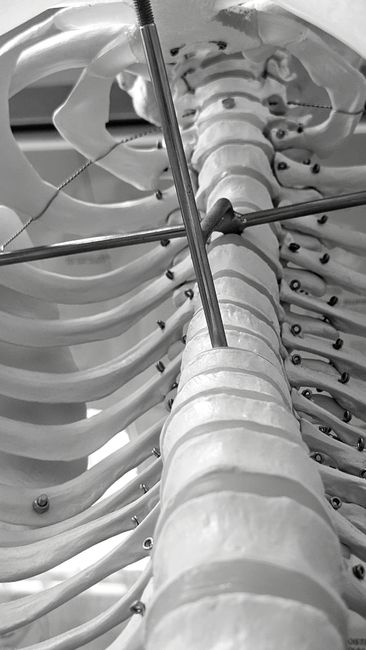
Discs cannot slip, and the difference matters
The phrase slipped disc conjures a coin sliding out from between two vertebrae, one wrong move from disaster. The anatomy says otherwise. Each disc is firmly grown into the vertebrae above and below it, woven in by strong fibres — it cannot slip out, fall out, or be pushed back in by any hand, machine or jhatka. What actually happens is that the disc's outer fibrous wall weakens or tears in one spot, and some of the gel-like centre presses outward: a bulge, or in stronger cases a herniation. The distinction is not pedantry; it changes what you fear and what you do.
How a disc actually gets injured
A disc's outer wall is built in criss-crossing layers, superbly strong against compression but more vulnerable to repeated bending under load — the classic combination being years of sustained flexed sitting punctuated by heavy lifts with a rounded back. The wall usually weakens gradually, which is why the sack of cement or the awkward suitcase that gets the blame was often only the final straw. Age plays a double role: middle-aged discs, drier and stiffer, herniate more readily than young ones, while elderly discs, having lost most of their gel, herniate less often.
Why the same bulge hurts one person and not another
Here is the fact that reframes everything: disc bulges are common in people with no pain whatsoever, and scan studies of symptom-free adults find them at rates that climb with every decade. Pain arises not from the bulge's existence but from whether it inflames or presses on pain-sensitive tissue — the outer disc wall, the ligaments, or a nerve root. This is why treating the scan picture rather than the person misleads: your symptoms, your movement examination and your recovery trajectory matter more than the millimetres in the report.
The body quietly clears up the mess
The most under-told story in spine care is resorption: the body treats extruded disc material as debris, sends immune cells to break it down, and over months the herniation commonly shrinks — the largest extrusions, counterintuitively, often shrink the most. Meanwhile the inflammation that made the nerve so furious settles, and symptoms typically improve well before, and sometimes without, any visible change on a repeat scan. Recovery over six to twelve weeks is the usual course for most disc episodes, which is why patience and graded activity outperform panic and premature surgery for the majority.
What recovery actually looks like week by week
Early on, the goals are calming irritability and staying gently mobile: short frequent walks, relieving positions such as lying with the knees supported, avoiding long sitting and deep loaded bending, and short-term medication from your doctor if pain blocks sleep. As symptoms centralise — retreating from the leg towards the back, a good prognostic sign physiotherapists watch for — exercise progresses to restoring full movement and then to building trunk and hip strength, because the best insurance against a repeat episode is a spine with reserves. Most people return to normal work and life; the disc wall remodels its scar over months, which is why the strengthening phase should outlast the pain. Sleep and stress management earn their place too, because both change pain sensitivity while the disc settles — a rested nervous system simply reports less alarm from the same tissue.
Where surgery genuinely belongs
Surgery for disc herniation is neither villain nor saviour — it is a specific tool for specific situations. It is urgent when there is numbness around the groin, bladder or bowel disturbance, or rapidly progressive weakness, and it is reasonable when severe nerve pain has defied six to twelve weeks of good conservative care. For leg-dominant pain in that situation, operations reliably speed relief, though long-term outcomes converge with non-surgical care for many patients. What surgery cannot do is give you a stronger trunk, better habits, or immunity from future episodes — rehabilitation remains the foundation either way.
Red flags first, reassurance after
Certain symptoms alongside back or leg pain need emergency assessment: numbness in the saddle area, difficulty passing or controlling urine, loss of bowel control, or a foot or leg growing weaker by the day. See a doctor promptly, too, for pain with fever, unexplained weight loss, constant night pain, or after significant trauma. Screen for these honestly — and then, if none apply, let the reassurance be equally honest: a disc episode is painful, common, and in the great majority of cases a story of recovery, not the beginning of a fragile spine.
Questions patients ask
Can a physiotherapist or masseur push my disc back in?
No — discs are anchored to the vertebrae and nothing has slipped out to be pushed back. Techniques that claim this may ease symptoms briefly, but the disc's recovery comes from settling inflammation and gradual resorption.
Should I be on complete bed rest with a disc problem?
No. Beyond a day or two of relative rest, staying gently active leads to faster recovery than bed rest, which weakens muscles and stiffens the spine. Move within comfort and build up gradually.
Will my disc herniation show up for life on scans?
Often not — many herniations shrink substantially over months as the body reabsorbs the material. More importantly, symptoms usually resolve regardless of what a follow-up scan shows.
Suggested articles

When Neck Pain Becomes Headache: The Cervicogenic Connection
Some headaches start in the neck, not the head. How cervicogenic headache works, how to tell it from migraine, and the exercises that ease it.
16 August 2026 · 4 min read
Stiff Back Every Morning? Causes and a Five-Minute Unlock Routine
Why backs stiffen overnight — dehydrated discs, still joints, sometimes inflammation — and a five-minute morning routine that unlocks yours.
14 August 2026 · 4 min read
Back Pain After Delivery: Rebuilding a Postpartum Spine
Postpartum back pain has fixable causes: loose ligaments, a stretched core and endless lifting. A physiotherapist's plan for rebuilding safely.
14 August 2026 · 4 min read