
Tennis Elbow Without Tennis: Fixing the Overuse Injury at Home
MBM (Mind Body Motion) Physiotherapy · 12 July 2026 · 3 min read
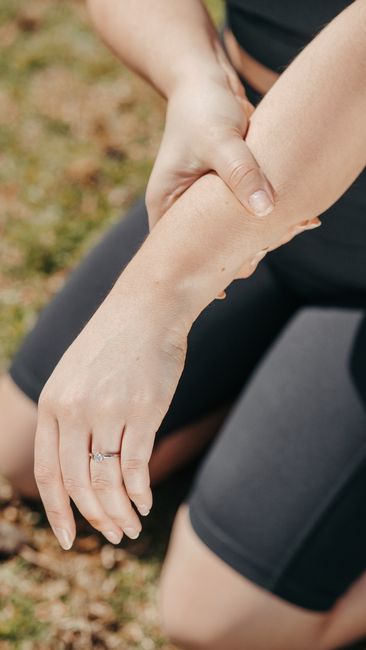
No racquet required
Hardly any of the tennis elbow we treat comes from tennis. It comes from wringing clothes, kneading dough daily, long hours of mouse and keyboard work, screwdriver-heavy jobs, lifting toddlers, and two-wheeler clutch levers held in traffic. The pain sits on the bony bump on the outer elbow, where the muscles that cock the wrist back and power your grip anchor through a single shared tendon. Every gripping action tugs on that anchor, and when the daily tally of tugs exceeds what the tendon can repair overnight, it begins to break down — not inflammation so much as a tendon losing the maintenance race.
Why resting it completely does not fix it
A degenerating tendon is not healed by absence of load, because tendon tissue rebuilds itself in response to tension — load is the signal that tells the cells to lay down organised new collagen. Complete rest calms pain temporarily, but the tendon quietly weakens further, and the pain returns with the first heavy shopping bag. The evidence-supported approach is therefore the opposite of instinct: reduce the aggravating overload, yes, but deliberately feed the tendon a controlled, progressive dose of exercise it can adapt to. Recovery is measured in weeks to months, and that honesty up front prevents the despair that makes people quit at week three.
Step one: cut the sneaky daily overload
Audit your day for high-grip moments and modify them for a few weeks: carry bags on the forearm or in a backpack rather than gripped in the hand, wring clothes with the palm up or use the machine's spin instead, thicken tool and pen grips with tape so the fingers work less, and keep the mouse close so the wrist is not held cocked all day. Lifting with the palm facing up uses the unaffected muscles more and hurts less — a useful rule for pans, buckets and children. These changes alone often drop daily pain noticeably within a fortnight.
Step two: isometrics to calm the pain
Begin with contractions that load the tendon without moving it. Rest the forearm on a table, palm down, hand over the edge; hold the wrist lifted in a slightly cocked position while the other hand pushes gently down against it, resisting so nothing moves. Hold thirty to forty-five seconds at a moderate effort, rest a minute, repeat four to five times, once or twice daily. You should feel working tension in the forearm and at most mild familiar ache at the elbow, easing as the hold continues — isometric loading has a genuine short-term pain-relieving effect on irritable tendons.
Step three: slow lowering to rebuild the tendon
After one to two weeks, progress to the exercise with the strongest track record: eccentric wrist lowering. Hold a half-to-one-kilogram weight — a small water bottle works — forearm supported palm-down, hand off the table's edge. Lift the wrist up with help from the other hand, then lower it slowly over three to five seconds under full control. Three sets of ten to fifteen, once daily, progressing the weight gradually over weeks. Mild pain up to three out of ten during the set is acceptable and does not mean damage; pain that climbs session after session means the load jumped too fast.
Weeks six to twelve: grip, function and going back to normal
As lowering becomes easy, add grip strengthening with a soft ball or rolled towel (squeeze five seconds, ten repetitions), wrist rotations holding a light rod or belan, and finally the movements your life actually demands — lifting the full kadhai, wringing, sustained typing — reintroduced deliberately and progressively rather than all at once on a festival cleaning day. Most people are substantially better by twelve weeks of consistent loading. A counterforce brace strapped just below the elbow can reduce pain during unavoidable heavy tasks in the meantime; treat it as a tool, not a treatment.
When elbow pain deserves a proper look
Get assessed rather than self-treating if the elbow is visibly swollen, hot or red, if pain followed a distinct injury or pop, if the joint locks or will not fully straighten, if numbness or tingling runs into the hand (which points to a nerve, not the tendon), or if night pain and rest pain dominate. Pain that has not improved at all after six to eight honest weeks of graded loading also warrants review — occasionally the neck, a nerve entrapment or a different elbow structure is the real culprit, and repeating the wrong programme harder will not fix the right problem.
Questions patients ask
Should I get a steroid injection for tennis elbow?
Injections numb pain quickly, but trials show worse outcomes at one year compared with exercise-based care, because the tendon itself is not rebuilt. Most guidelines now reserve them for exceptional cases.
Can I keep working with tennis elbow?
Usually yes, with modifications — palm-up lifting, thicker grips, forearm carrying and micro-breaks from sustained gripping. Complete time off work is rarely necessary or even helpful.
Why does it hurt most when picking up a cup or kettle?
A palm-down grip with an outstretched arm puts the wrist-cocking muscles at maximum tension, tugging directly on the damaged anchor point. Turn the palm up or bring the object closer to lift with less pain.
Suggested articles

Hip Pain From Sitting: Why Desk Years Show Up in Your Hips
Long sitting shortens hip flexors, starves glutes and irritates deep hip tissue. Where sitting hip pain comes from and the routine that reverses it.
24 August 2026 · 4 min read
Wrist Pain at the Keyboard: Carpal Tunnel, RSI and What Helps
Not all keyboard wrist pain is carpal tunnel. How to tell nerve from tendon trouble, night splints, glides, desk fixes and when to get tested.
23 August 2026 · 4 min read
Calf Strain: From First Limp to Full Stride
A pulled calf heals in stages, not by rest alone. Grades explained, week-by-week loading from heel raises to running, and the re-tear traps to avoid.
22 August 2026 · 4 min read