
Balance Training: Simple Drills for Every Age
MBM (Mind Body Motion) Physiotherapy · 31 May 2026 · 3 min read
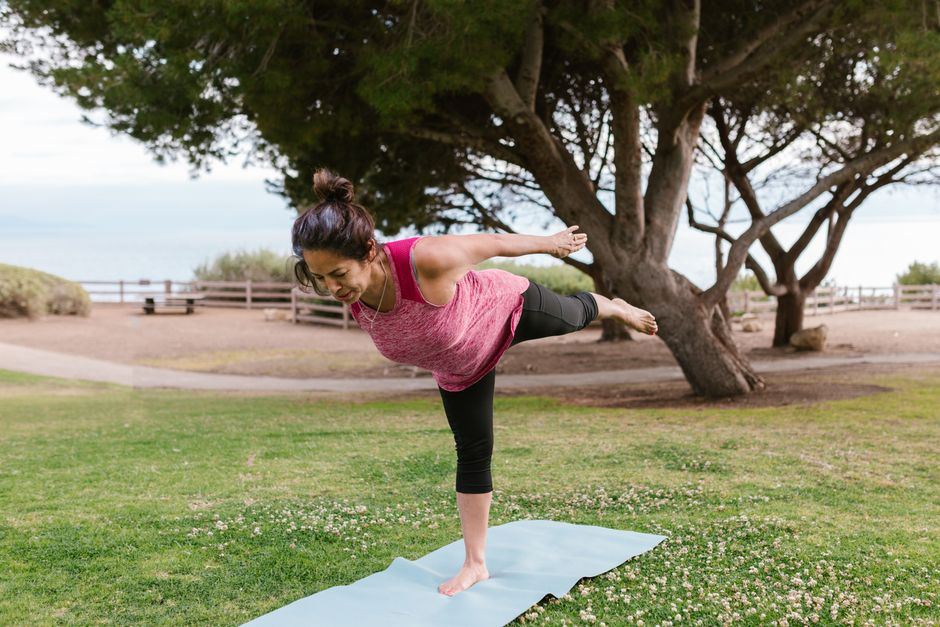
Balance fades silently — and returns with practice
Try standing on one leg while brushing your teeth tonight; the result surprises most people over forty. Balance is built from three information streams — vision, the inner ear, and position sensors in the feet, ankles and joints — knitted together by reflexes that respond within fractions of a second. Modern life quietly starves the system: flat floors, chairs, car seats and handrails remove the small daily challenges that once kept it sharp, so it dulls for decades before anyone notices, usually announcing itself as a stumble on a kerb or a wobble on a bus. The repair is unglamorous and reliable: practise the skill, and the reflexes sharpen at any age.
Set up for safety before you challenge yourself
Every drill below follows one rule: challenge within reach of support. Practise beside a kitchen platform, a heavy table or a wall corner, with fingertips hovering near the surface — touching lightly when needed, lifting away as confidence grows. Clear the floor of rugs and wires, wear flat non-slip footwear or go barefoot on a dry floor, and never practise new drills on wet bathroom tiles or in socks on marble. For anyone with recent falls, dizziness, or conditions affecting the nerves of the feet — long-standing diabetes chief among them — a professional assessment should set the starting level, because the right challenge for one person is a hazard for another.
Level one: narrowing the base
Begin standing with feet together, arms crossed over the chest, holding steady for thirty seconds. When that is easy, move to the semi-tandem stance — one foot half a step ahead, its heel beside the other's big toe — thirty seconds each side. Then full tandem: heel directly in front of toes as if on a rope, thirty seconds each side. Practise the whole ladder once or twice daily; each stance is passed when you manage thirty steady seconds twice in a row. You should feel constant small corrections rippling through the feet and ankles — that flickering effort is the training itself, not a sign of failure.
Level two: one leg, then one leg with interference
Single-leg standing is the benchmark drill: shift weight onto one foot, lift the other a few centimetres, and hold — building from five or ten seconds towards thirty per side, two to three rounds daily. Once thirty seconds is routine, add interference, because real-world balance is never given full attention: turn the head slowly side to side while holding, count backwards from a hundred by sevens, or pass a water bottle from hand to hand. The wobble that returns when your attention is split is precisely the gap between exercise balance and street balance, and closing it is what protects you on a crowded platform.
Level three: balance in motion
Static steadiness matters less than steadiness while moving, so the ladder continues into gait drills along a corridor or compound wall. Tandem walking: ten heel-to-toe steps along an imagined line, turn carefully, and return, two to three lengths. Then walking with head turns every few steps; walking while carrying a half-full glass of water; slow, deliberate direction changes and figure-of-eight walking around two chairs. For the fitter, add stepping practice — quick, accurate steps forward, sideways and backward onto marked spots — because a fast, well-placed step is the reflex that actually rescues a stumble. Keep all of it near support until it is boringly easy.
Every age has its version
Children build balance through play — hopping games, kerb-walking, skipping — and need opportunity more than programmes. Working-age adults hold their sharpness cheaply: one-leg stands during tooth-brushing, tandem stance while the chai brews, a weekly game of badminton, and balance stays honed for the decades when it matters. From the sixties onward the training deserves deliberate daily slots, ideally paired with the leg-strengthening described elsewhere on this site, because strength and balance prevent falls as a team. And after any fall, or a diagnosis like Parkinson's disease or stroke, balance work moves from general fitness to targeted rehabilitation — same principles, professionally dosed.
When wobbliness is a symptom, not a skill gap
Trainable unsteadiness improves within four to eight weeks of daily practice; unsteadiness that does not, or that arrives suddenly, needs a doctor rather than more drills. Seek review for spinning dizziness or vertigo, balance loss with new headache, double vision, slurred speech or limb weakness — sudden versions of which are emergencies — repeated unexplained falls, numbness in the feet, or lightheadedness on standing, which can stem from blood pressure or medications and is fixable once found. Fainting is never a balance problem; it is a medical one. Screen these honestly, then train daily, because thirty seconds on one leg costs nothing and one prevented fracture repays a lifetime of tooth-brushing practice.
Questions patients ask
How often should I practise balance exercises?
Little and often wins: five to ten minutes daily beats one long weekly session, because the reflexes sharpen through frequent exposure. Attaching drills to daily routines like tooth-brushing makes the frequency automatic.
Is it normal to wobble a lot when starting?
Yes — the constant small corrections are the training working, not failing. Stay near support, and expect visibly steadier holds within two to four weeks of daily practice.
Can balance training help even after age 75?
Emphatically yes. Balance reflexes remain trainable late in life, and fall-prevention programmes for older adults rest on exactly these drills, paired with leg strengthening. Start at an easier level with support close by.
Suggested articles
Walking vs Running: What Each Really Does to Your Joints
Running is not automatically bad for knees, and walking is not automatically enough. What impact really does to cartilage, and how to choose.
18 August 2026 · 4 min read
Resistance Bands for Beginners: A Full-Body Routine in Twenty Minutes
One rubber band, eight movements, twenty minutes: a beginner's full-body strength routine with clear sets, reps and form checks for every move.
18 August 2026 · 4 min read
Gentle Sciatica Stretches for Seniors: Relief Without Strain
Chair-based, bed-based sciatica stretches designed for older bodies — gentle on hips and balance, precise about what each stretch should feel like.
17 August 2026 · 4 min read