
Resistance Bands for Beginners: A Full-Body Routine in Twenty Minutes
MBM (Mind Body Motion) Physiotherapy · 18 August 2026 · 4 min read
Why a rubber band builds real muscle
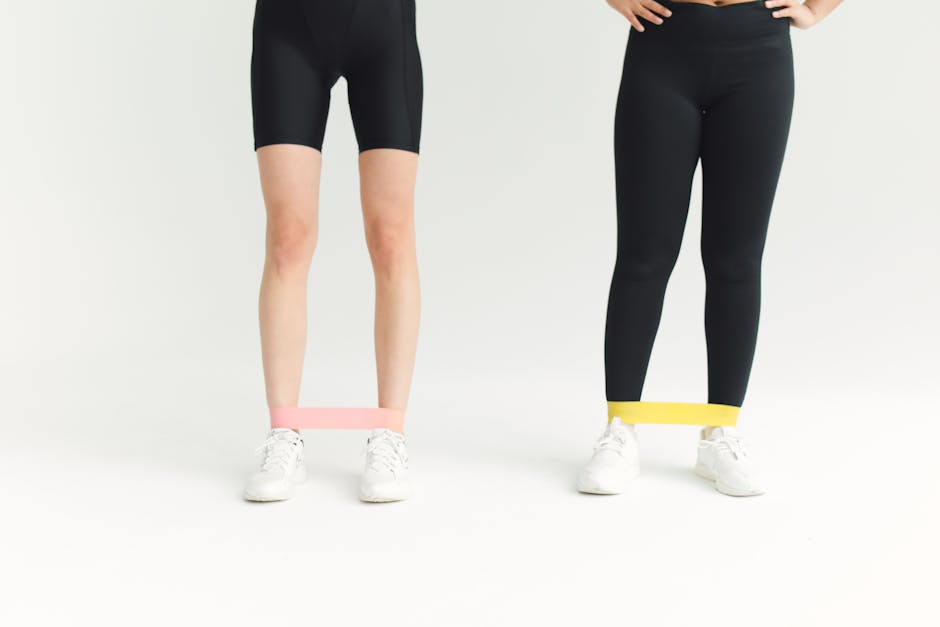
A resistance band weighs less than your phone, fits in a drawer, and can load every major muscle group in your body. The physiology is straightforward: muscle grows in response to tension taken close to fatigue, and it cannot tell whether that tension comes from iron plates or stretched latex. Bands even add something dumbbells lack — the resistance rises as the band lengthens, so every repetition finishes at its hardest point, which trains the end of the movement where daily-life strength often fails.
For beginners, bands remove the two biggest barriers to strength training: cost and intimidation. A set of loop or tube bands costs a few hundred rupees in India or ten to twenty dollars in the US, and the learning curve is gentle. Buy a light and a medium band to start, because different muscle groups need different resistance.
Setting up: anchors, safety and the rule of tension
Inspect the band before every session by stretching it against light and looking for nicks or thin patches, because a snapped band under tension can whip the face. Anchor bands around solid, immovable objects: a heavy table leg, a closed door with a proper door anchor, or a stair railing, never a chair that can tip or a door that someone might open.
Choose resistance so the last two or three repetitions of each set feel genuinely hard while your form stays clean. If you can finish fifteen repetitions chatting comfortably, the band is too light for growth; if your trunk twists and jerks to complete eight, it is too heavy. Perform every repetition with a two-second pull and a slow three-second return — controlling the band as it shortens is half the training effect, and rushing it away is the most common beginner mistake.
Lower body: squats and glute kickbacks
Banded squat: stand on the band with feet shoulder-width apart and hold the ends at your shoulders. Sit your hips back and down as if onto a stool until the thighs approach parallel with the floor, knees tracking over the second toe, then drive up through the heels. Three sets of ten to twelve. The work belongs in thighs and buttocks; knees caving inward or heels lifting means lighten the band or shorten the depth.
Glute kickback: loop a band around both ankles, rest your hands on a wall, and with a soft standing knee, press one straight leg backward about thirty degrees without arching the lower back. Two sets of twelve to fifteen per side. You should feel a focused squeeze in the buttock — if the lower back cramps instead, the leg is going too high and the range needs trimming.
Upper body pulls: rows and pull-aparts
Seated row: sit on the floor with legs extended, loop the band around both feet, and hold an end in each hand. Sitting tall, draw the elbows back past your ribs, squeezing the shoulder blades together, then release slowly forward. Three sets of ten to twelve. The pull belongs between the shoulder blades and in the upper back, not in the neck; shrugging shoulders towards the ears means the band is too heavy.
Band pull-apart: hold the band at chest height with straight arms, hands shoulder-width apart, and stretch it outward until your arms open wide, pausing one second before returning slowly. Two sets of twelve to fifteen. This small movement strengthens the rear shoulder muscles that hours of desk work leave dormant.
Upper body pushes and arms: presses and curls
Chest press: anchor the band behind you at chest height — around a railing or in a door anchor — face away, and press both handles forward from your chest until the arms straighten, then return over three slow seconds. Three sets of ten to twelve, feeling the chest and back of the arms work while the trunk stays braced and still.
Biceps curl: stand on the middle of the band, elbows pinned to your sides, and curl the hands to the shoulders before lowering slowly. Two sets of ten to fifteen. Elbows drifting forward or the back leaning are signs of over-heavy resistance. Together, these two movements cover the pressing and arm strength that carrying shopping bags, lifting children and pushing doors demand daily.
The twenty-minute structure, and how to progress it
Order the six exercises so muscle groups alternate — squat, row, chest press, kickback, pull-apart, curl — resting forty-five to sixty seconds between sets, which lands the whole session at roughly twenty minutes. Two to three sessions a week on non-consecutive days is the beginner's sweet spot, because muscle rebuilds itself on the rest days, not during the workout.
Progress along one dial at a time: add repetitions until you reach the top of the range, then add a set, then move to the next band colour and drop the repetitions back down. Expect visible strength change — easier stairs, firmer arms, steadier squats — in four to six weeks of honest work.
Who should adapt this, and warning signs to respect
Band training suits nearly everyone, but a few groups should adapt it. Anyone with uncontrolled blood pressure or heart disease should get medical clearance and avoid breath-holding during effort — exhale on the hard phase of every repetition. Recent surgery, a shoulder that clicks painfully overhead, or joints that swell after sessions all call for a physiotherapist to tune the exercise list first. Stop the session for chest pain, unusual breathlessness, dizziness, or any sharp joint pain, and seek advice rather than pushing through; the only acceptable discomforts here are muscle burn during a set and mild next-day soreness that fades within forty-eight hours.
Questions patients ask
Which resistance band should a complete beginner buy?
Start with a light and a medium long loop or tube band with handles; that pair covers weaker and stronger muscle groups. Avoid the thinnest therapy bands for strength work — most adults outgrow them within weeks.
Can resistance bands replace a gym membership?
For general strength, muscle tone and rehabilitation, yes — bands load every major movement pattern. Serious muscle-building eventually benefits from heavier free weights, but most people's health goals are fully served by progressive band training.
Why do my muscles shake during band exercises?
Shaking simply means the muscle fibres are working near their current limit and recruiting extra help, which is normal and harmless in a new exercise. It settles as strength improves over two to three weeks; sharp pain, not shaking, is the signal to stop.
Suggested articles
Walking vs Running: What Each Really Does to Your Joints
Running is not automatically bad for knees, and walking is not automatically enough. What impact really does to cartilage, and how to choose.
18 August 2026 · 4 min read
Gentle Sciatica Stretches for Seniors: Relief Without Strain
Chair-based, bed-based sciatica stretches designed for older bodies — gentle on hips and balance, precise about what each stretch should feel like.
17 August 2026 · 4 min read
A Wall Is a Gym: Strength Exercises for Small Homes
No equipment, no floor space — a wall provides resistance, support and feedback. A full-body strength routine for flats, hostels and small homes.
16 August 2026 · 4 min read