
Desk Stretches: Undo Eight Hours of Sitting in Five Minutes
MBM (Mind Body Motion) Physiotherapy · 11 May 2026 · 3 min read
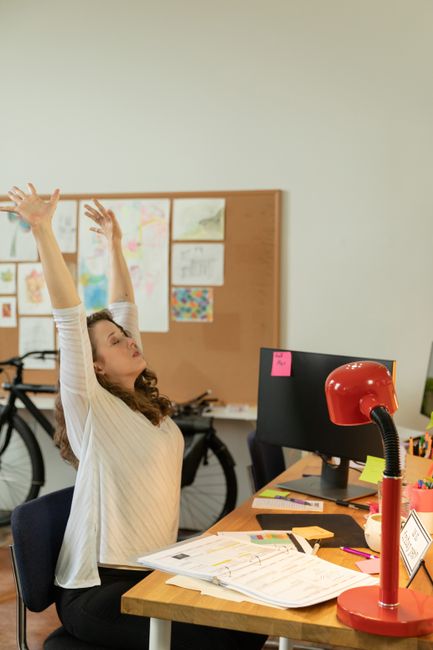
What eight seated hours actually do to a body
Sitting is not dangerous the way smoking is, whatever the headlines say — but eight unbroken hours of it reshapes you for the worse in predictable ways. Hip flexors and chest muscles adaptively shorten in their day-long slackened positions; the discs of the lower back sustain constant creeping load in flexion; blood pools in the legs; and the muscles between the shoulder blades, stretched and inactive, ache by late afternoon. The antidote is not a perfect chair. It is interrupting the position — and a five-minute routine, done once or twice in the workday, targets every link in that chain.
Stretch one: the standing back extension
Stand up, place your palms on your lower back with fingers pointing down, and gently arch backward over your hands, five slow repetitions, holding two to three seconds at the comfortable end. This reverses the flexed position your discs have held all morning — the same movement bakers and farmers do instinctively after stooping. You should feel pressure and stretch across the lower back, easing with each repetition; pinching pain, or pain shooting into a leg, means stop and keep the range smaller. Anyone with diagnosed spinal stenosis, whose backs often dislike extension, can substitute a walk down the corridor.
Stretch two and three: hips and chest, the two great shorteners
For the hip flexors, take a half-kneeling position beside your chair — or standing, slide one foot back into a short lunge — tuck the tailbone, and press the hips forward until the front of the rear hip stretches, twenty to thirty seconds each side. For the chest, stand in a doorway with forearms on the frame, elbows at shoulder height, and step through until the front of the chest opens, twenty to thirty seconds, twice. These two stretches attack the postures sitting rehearses: hips folded, shoulders rounded. Feel it in the hip front and chest respectively — never as pinching in the shoulder joint or lower-back pain, which signal too much depth.
Stretch four and five: neck and shoulder blades
Sitting tall, drop one ear towards its shoulder while the opposite hand reaches gently towards the floor, fifteen to twenty seconds each side, feeling the pull along the side of the neck. Follow with chin tucks — gliding the head straight back, five-second holds, eight to ten repetitions — which recruit the deep neck muscles that screens switch off. Then squeeze the shoulder blades back and slightly down, as if tucking them into back pockets, five seconds, ten repetitions. The neck stretches must stay gentle: no yanking with the hand, and any tingling into the arm, dizziness, or recent neck injury means skip them and get assessed instead.
Stretch six, plus the circulation reset
Finish with the wrists and calves, the forgotten ends of desk work. Extend one arm, palm up, and draw the fingers gently back with the other hand for fifteen seconds, then palm down and repeat — relief for forearms that type all day, and worth stopping if it produces tingling in the fingers rather than stretch. Then do ten to fifteen slow calf raises off the floor, which squeezes pooled blood upward through the leg veins by the muscle-pump mechanism and leaves the legs feeling noticeably lighter. If you wear heels at work, do the calf raises barefoot when possible.
The dose matters more than the routine
One heroic stretch session cannot neutralise eight motionless hours — frequency beats intensity everywhere in tissue physiology. Run the full five minutes once or twice daily, but scatter micro-breaks besides: stand during phone calls, walk to a colleague instead of pinging, use a distant water point deliberately, take the stairs for one or two floors. Every thirty to forty-five minutes of sitting deserves thirty seconds of movement. Office culture can make this feel awkward at first; it stops feeling awkward the week your three-p.m. neck ache fails to arrive, and colleagues tend to copy what visibly works.
When desk pain is telling you something else
Most desk-related aching responds within two to three weeks of regular movement breaks and these stretches. Persist beyond that, or worsen, and it deserves assessment rather than more stretching — particularly numbness or tingling in the hands (common culprits being nerve compression at the wrist or neck), pain waking you at night, a weakening grip, or headaches escalating in frequency. And two symptoms at a desk are never posture: chest pain or pressure with breathlessness needs emergency attention, and a swollen, painful calf after long immobile sitting should be checked the same day, because a clot in the leg veins is rare but must not be walked off.
Questions patients ask
How often should I do this routine during the workday?
The full five minutes once or twice daily, ideally late morning and mid-afternoon, plus a thirty-second movement break every thirty to forty-five minutes of sitting. Frequency is the real medicine.
Can I do these stretches in formal office clothes?
Yes — every stretch here works in ordinary office wear and needs no floor work. The half-kneeling hip stretch has a standing version precisely so a mat is never required.
Will a standing desk remove the need for stretching?
Standing all day simply loads different tissues — feet, calves, lower back. The benefit comes from alternating positions and moving often; the stretch breaks remain worthwhile either way.
Suggested articles
Walking vs Running: What Each Really Does to Your Joints
Running is not automatically bad for knees, and walking is not automatically enough. What impact really does to cartilage, and how to choose.
18 August 2026 · 4 min read
Resistance Bands for Beginners: A Full-Body Routine in Twenty Minutes
One rubber band, eight movements, twenty minutes: a beginner's full-body strength routine with clear sets, reps and form checks for every move.
18 August 2026 · 4 min read
Gentle Sciatica Stretches for Seniors: Relief Without Strain
Chair-based, bed-based sciatica stretches designed for older bodies — gentle on hips and balance, precise about what each stretch should feel like.
17 August 2026 · 4 min read