
Physiotherapy for Seniors: Staying Mobile, Independent and Fall-Free
MBM (Mind Body Motion) Physiotherapy · 5 April 2026 · 3 min read
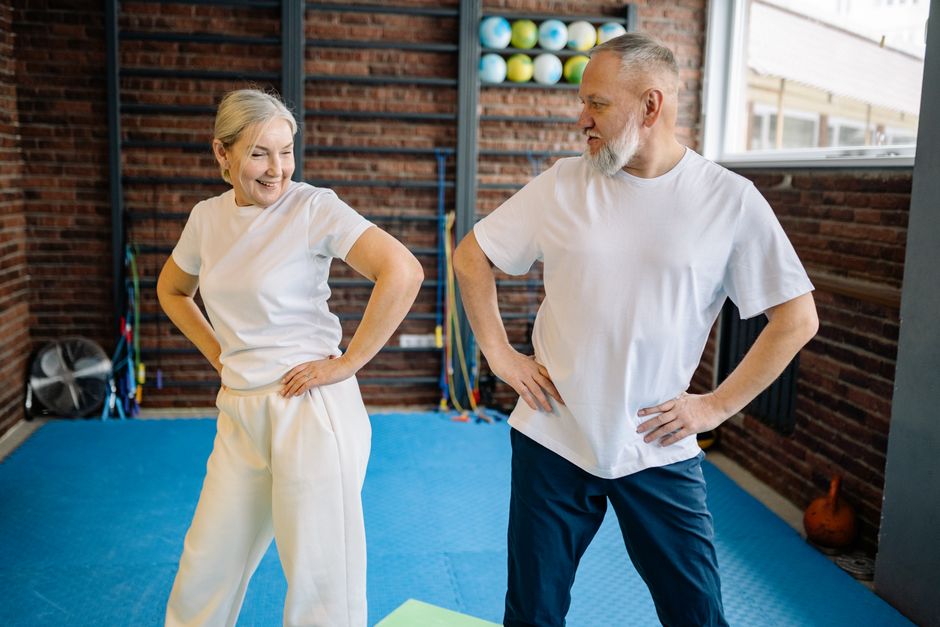
Slowing down is not a diagnosis
Somewhere in their seventies, many people quietly shrink their world — the evening walk stops, the market feels far, the stairs become a reason to stay on one floor. Families accept it as age, but much of it is not age; it is deconditioning, the reversible loss of strength and balance that comes from moving less. The distinction matters because deconditioning responds to training at any age, and physiotherapy for seniors is largely the science of proving that.
The stakes are larger than comfort. Mobility decides whether an older person can use the toilet unassisted, attend the market, climb to the terrace and remain in their own home — and each of those abilities, once lost, is far harder to regain than it would have been to keep. Training protects them while they still exist.
What actually weakens with age — and how fast it returns
From around age sixty, muscle is lost at an accelerating rate unless it is loaded, and the fast, powerful fibres — the ones that catch you when you trip — disappear first. The encouraging part is the response to training: older muscle builds strength on the same biological pathway as young muscle, and meaningful gains appear within eight to twelve weeks of twice-weekly resistance work. Chair squats, step-ups on the bottom stair and sit-to-stand repetitions are worth more to a seventy-year-old than any supplement in the cupboard.
Balance is a skill, and skills can be rehearsed
Steadiness comes from three systems working together — vision, the inner ear, and position sensors in the ankles and feet — coordinated by reflexes that slow with disuse. Balance training rehearses exactly the situations that cause falls: narrow stances, turning, reaching outside the base of support, standing on one leg while the hands are busy. Practised daily near a sturdy support, these drills measurably cut fall risk, which matters because a hip fracture is one of the most life-changing injuries an older person can suffer.
Five minutes daily is a sufficient dose: feet-together standing, then tandem stance, then single-leg holds near the kitchen platform, each level progressed only when thirty steady seconds feel easy. The drills cost nothing, need no equipment and fit between household tasks.
The fear-of-falling spiral
After one stumble, many seniors begin avoiding whatever frightened them — the bathroom at night, the temple stairs, the uneven lane outside. Avoidance feels safe but works like a slow poison: less activity means weaker legs and duller balance reactions, which makes the next stumble more likely, which deepens the fear. Physiotherapy breaks the spiral from both ends, rebuilding physical capacity while graded practice rebuilds confidence one small success at a time.
Making an Indian home fall-proof
Most falls in our patients happen at home, and the culprits repeat: wet bathroom floors, loose rugs at doorways, trailing wires, dim corridors on the way to the toilet at 2 a.m., and low stools used as makeshift steps. Fit grab bars beside the toilet and in the bathing area, use anti-skid mats, keep a night lamp burning in the passage, and move daily-use items off high shelves. For those who use floor seating or an Indian toilet, practising controlled ways of getting down and up is itself an exercise worth training rather than abandoning.
Exercising safely with arthritis, diabetes and blood pressure
Most seniors carry at least one chronic condition, and none of the common ones forbids exercise — they shape it. Arthritic knees prefer strengthening and cycling-type movement over deep squatting; diabetics should check their feet daily and avoid exercising on an empty stomach if on insulin or sulphonylureas; those on blood pressure medicines should rise from the floor slowly, as some drugs blunt the circulation's quick adjustments. A physiotherapist designs around these realities, and coordination with the treating doctor keeps everyone aligned. Bring the full medicine list to the first session — it changes exercise decisions more often than families expect.
When to involve the doctor first
See a doctor before pushing on with exercise if there is chest pain or pressure with activity, breathlessness out of proportion to effort, fainting or near-fainting, a fall with a blow to the head, sudden one-sided weakness, unexplained weight loss, or a hot, swollen joint. Repeated unexplained falls also deserve a medical review of vision, blood pressure and medications, because the cause is often correctable. Everything else — the stiffness, the slowing, the shrinking world — is territory where training, patience and a little courage give back far more than most families expect.
Questions patients ask
Is walking enough exercise for someone over 65?
Walking is excellent for the heart and mood, but it does not build the leg strength or balance reactions that prevent falls. Add sit-to-stand repetitions and simple balance drills a few days a week.
My mother has knee pain — should she stop climbing stairs?
Usually the goal is the opposite: strengthen her legs so stairs become manageable, using rails and a step-by-step pattern meanwhile. Complete avoidance weakens her further. An assessment can set the right starting point.
Can physiotherapy help after a hip fracture in an elderly person?
It is essential. Structured rehab after surgery restores walking, rebuilds confidence and reduces the risk of a second fall. Starting early, as the surgeon advises, strongly influences how much independence returns.
Suggested articles

Numb Feet, Careful Steps: Physiotherapy for Diabetic Neuropathy
When diabetes numbs the feet, balance and skin both suffer. How physiotherapy rebuilds steadiness, protects numb feet and keeps walking safe.
25 August 2026 · 4 min read
Vertigo and the Ear Crystals: How Physiotherapy Stops the Spinning
The commonest vertigo comes from loose ear crystals — and a physiotherapist can often stop it in one or two visits with a repositioning manoeuvre.
24 August 2026 · 4 min read
Physiotherapy for Arthritis: Moving Joints That Want to Stop
Arthritic joints hurt with movement yet decline without it. How physiotherapy resolves that paradox with graded strength, range work and pacing.
24 August 2026 · 4 min read