
Physiotherapy for Arthritis: Moving Joints That Want to Stop
MBM (Mind Body Motion) Physiotherapy · 24 August 2026 · 4 min read
The paradox at the heart of arthritis
Arthritic joints send a misleading message: movement hurts, so movement must be harmful. The biology says the opposite. Cartilage has no blood vessels and feeds only when compression pumps joint fluid through it, so a rested arthritic joint is a starved one; meanwhile the muscles crossing the joint — its living shock absorbers — waste with every avoided flight of stairs. Resting an arthritic joint into comfort is how mild arthritis becomes disabling arthritis.
Physiotherapy exists to resolve this paradox: finding the dose of movement that nourishes without flaring, then expanding it week by week. Exercise is the single most consistently recommended treatment for osteoarthritis in clinical guidelines in both India and the US, because it is the only one that changes the joint's future rather than just its afternoon.
Know which arthritis you are treating
Osteoarthritis — the wear-and-repair form affecting knees, hips, hands and spine — behaves mechanically: it aches with overuse, stiffens briefly after rest, and eases with the right activity dose. Inflammatory arthritis, such as rheumatoid arthritis, is a different disease: an immune attack on joint linings that brings prolonged morning stiffness beyond thirty to sixty minutes, swelling in multiple small joints, and fatigue, and it needs a rheumatologist and disease-modifying medication first, with physiotherapy alongside.
The distinction changes the plan. Osteoarthritic joints are progressively loaded even when mildly grumbly; inflammatory joints in an active flare get gentle range work and protection until medication cools the flare. If you have never had a diagnosis — just 'gathiya' (the common Hindi word for joint disease) — get one, because hot, swollen, stiff-in-the-morning joints deserve blood tests, not just exercises.
Strength: the closest thing to a joint-protecting drug
For knee osteoarthritis, the best-evidenced exercise on earth is unglamorous quadriceps and hip strengthening. Start with sit-to-stands from a firm chair with armrests: stand fully tall, lower back down over three seconds — two to three sets of eight to twelve, most days. Add step-ups onto a low step, straight-leg raises with a five-second hold, and mini squats to a shallow, pain-tolerable depth. The thigh burn is the medicine; kneecap sharpness means shrink the depth, not abandon the exercise.
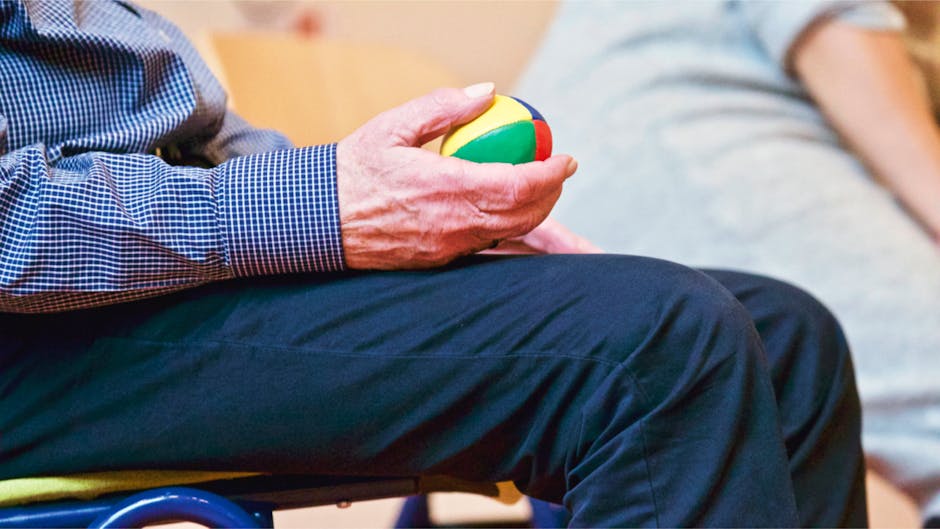
Arthritic hands respond to the same principle at smaller scale: squeezing a soft ball or rolled sock for five seconds, ten repetitions; finger-thumb pinches against light putty; sliding fingers through straight, hook and fist shapes, ten rounds — daily, ideally after a warm soak. Everywhere the rule holds: two to three strength sessions weekly per region, progressed gradually, produce pain reductions in trials comparable to common painkillers.
Range and rhythm: keeping the full circle of motion
Joints keep only the range they visit, so each arthritic joint should tour its full comfortable range daily: knees bending and straightening fully in sitting, hips circling gently in standing, shoulders climbing the wall with the fingers — five to ten slow repetitions each, morning and evening, moving to the point of stretch and mild grumble but never sharp pain. Heat before range work relaxes guarding; many people find warm-water exercise the kindest version of all, since buoyancy unloads body weight while water resists movement.
Rhythmic, low-impact whole-body movement rounds out the week: cycling, swimming, brisk walking or gentle yoga — thirty minutes most days, in ten-minute portions if needed. Movement snacks matter here more than anywhere: two minutes of movement every half hour keeps the gelling stiffness of stillness at bay.
Pacing, flares and the activity thermostat
Arthritic tissue punishes boom-and-bust: the good day spent deep-cleaning the house, followed by three days of payback. Pacing replaces it with a thermostat — do slightly less than today's tolerable maximum, repeat consistently, and raise the level by roughly ten percent a week. The twenty-four-hour rule judges every session: pain that settles to baseline by the next day was a fine dose; pain still elevated a day later means trim the next session by a third.
Flares still happen, and the protocol is temporary: two or three days of relative rest with gentle range work, ice or heat by preference, then a graded return starting at half the pre-flare dose. What it never includes is abandoning the programme, because every month of stopped strengthening quietly refunds the gains.
The supporting cast: weight, aids and honest adjuncts
For weight-bearing joints, body weight is a lever no exercise matches: each kilogram (2.2 lb) lost removes several kilograms of load from each knee per step, and even modest weight loss, where appropriate, measurably eases pain. A walking stick used in the hand opposite the painful knee or hip offloads the joint remarkably — a tool, not a defeat. Cushioned shoes, and a raised chair or Western-style toilet seat where deep squatting provokes knees, are similar cheap wins — relevant in Indian homes where floor-level sitting and squat toilets are daily demands.
Adjuncts earn honest labels: heat, cold, massage, TENS, braces and the occasional steroid injection can all ease symptoms around exercise, but none of them strengthens a muscle or nourishes cartilage — a programme that is machines-first and exercise-last has its priorities inverted.
When arthritis needs more than physiotherapy
See a doctor promptly for a joint that is hot, red and swollen with fever — infection in a joint is an emergency — or for a sudden inability to bear weight. Book a medical review for prolonged morning stiffness with multiple swollen joints, unexplained weight loss or night pain. And when a knee or hip remains pain-limited despite months of genuine strengthening and pacing, a surgical opinion about joint replacement is not failure but sequencing — and the strongest candidates walk out of that surgery fastest, so the physiotherapy was never wasted.
Questions patients ask
Does exercise wear out an arthritic joint faster?
No — appropriate loading nourishes cartilage and strengthens the muscles that shield the joint, and exercisers with arthritis consistently report less pain and better function than resters. The dose matters: progress gradually and judge each session by the next day.
Is walking or cycling better for knee arthritis?
Both work; cycling loads the knee more gently through range and suits flared or severe knees, while walking is more functional and bone-friendly. Many people alternate them — the best choice is whichever you will do consistently at a comfortable dose.
Should I use hot or cold on arthritic joints?
Heat suits stiff, achy joints and pre-exercise loosening; cold suits hot, swollen flares and post-activity settling. Fifteen to twenty minutes with skin protection either way — both are comfort measures around exercise, not treatments in themselves.
Suggested articles

Numb Feet, Careful Steps: Physiotherapy for Diabetic Neuropathy
When diabetes numbs the feet, balance and skin both suffer. How physiotherapy rebuilds steadiness, protects numb feet and keeps walking safe.
25 August 2026 · 4 min read
Vertigo and the Ear Crystals: How Physiotherapy Stops the Spinning
The commonest vertigo comes from loose ear crystals — and a physiotherapist can often stop it in one or two visits with a repositioning manoeuvre.
24 August 2026 · 4 min read
Stroke Rehab at Home: Building on Clinic Sessions Between Visits
Clinic sessions cover a few hours a week; recovery needs hundreds of repetitions. How to run a safe, structured home programme between visits.
24 August 2026 · 4 min read