
Stroke Rehab at Home: Building on Clinic Sessions Between Visits
MBM (Mind Body Motion) Physiotherapy · 24 August 2026 · 4 min read
The arithmetic that makes home practice non-negotiable
What happens between physiotherapy sessions decides more of a stroke recovery than the sessions themselves. The brain rewires around damaged tissue through repetition — reaching, gripping, stepping, performed hundreds of times — yet observation studies find patients practising only a few dozen repetitions in a typical clinic hour. Two or three clinic visits a week therefore supply perhaps one percent of a waking week; the other ninety-nine percent is where neuroplasticity is either fed or starved.
This article is about that other ninety-nine percent: turning prescribed exercises into a structured home programme. It assumes clinic care continues — the therapist chooses, progresses and corrects the exercises; home practice multiplies professional treatment, it does not replace it.
Set up the programme like a prescription, not a hope
At the end of each clinic session, leave with three things written down: which exercises to do at home, how many repetitions and sets of each, and what correct performance looks and feels like — filming the therapist demonstrating on a phone prevents weeks of well-intentioned wrong practice. Ask explicitly which mistakes to watch for, because stroke recovery has a saboteur called compensation: the strong side and trunk quietly taking over movements the weak side should be relearning.
Then schedule practice as fixed slots rather than intentions — for most families, two or three blocks of twenty to thirty minutes beat one exhausting hour, because fatigued repetitions rehearse poor patterns. Tie blocks to daily anchors such as morning tea and the afternoon rest. A simple tick-chart on the wall converts vague encouragement into visible progress.
A safe daily structure: warm, practise, function, rest
Open each block with five minutes of gentle preparation in sitting — shoulder shrugs and circles, trunk rotations, ankle pumps, marching the feet. Then run the prescribed exercises, weakest movements first while energy is highest; typical prescriptions layer sitting balance, weight shifts, sit-to-stands, supported standing, stepping and arm-hand tasks, but your therapist's specific list overrides any generic one.
Close every block with five minutes of function: use the practised movement in real life immediately — drinking from a steel tumbler with the affected hand, buttoning one shirt button, standing to reach a shelf. Task-specific practice is the strongest signal the rewiring brain receives. Then rest properly — post-stroke fatigue is a genuine neurological symptom, not laziness.
The caregiver's role: assist the least amount necessary
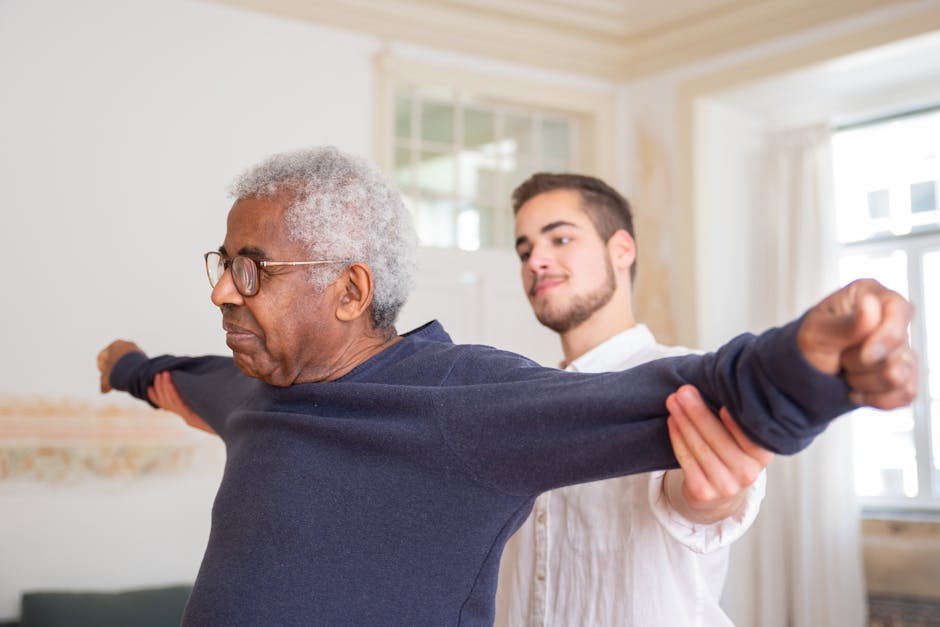
Family members — often the backbone of home rehab in Indian joint families, and equally the spouse in an American household — carry one golden rule: help the least amount that keeps the task safe and successful. Recovery lives in the patient's own effortful attempts, so a caregiver who lifts, steadies and completes every movement is unintentionally stealing repetitions. Guard, guide with fingertips, and wait out the slow attempts.
For standing and stepping practice, position yourself on the weak side and slightly behind, with a stable chair or bed within the patient's reach and walkways cleared of loose rugs, wires and wet floors. Never pull on the affected arm — a weak shoulder subluxes easily — so assist through the trunk, a transfer belt, or the strong side. If the patient uses a walking aid, it goes in the strong hand unless the therapist has said otherwise.
Dosage, feel and the signs you are overdoing it
Aim, in consultation with your therapist, for meaningful daily volume — many programmes build towards forty-five to sixty total minutes of practice a day across blocks. Effort should feel like concentrated hard work, not strain: breath held, face reddening, or the whole body stiffening into abnormal patterns means the task is currently too hard and needs an easier version.
Soreness that fades by next morning is acceptable; pain during exercise is not the currency of stroke rehab and usually signals compensation or an irritated shoulder. Watch week to week rather than day to day for progress — smoother sit-to-stands, longer standing tolerance. Plateaus lasting two to three weeks are information for the physiotherapist, not a reason to stop — measurable gains continue well beyond the first year when practice continues.
Weaving rehab into the household day
The richest home programme hides inside ordinary routines. Sorting dal (lentils) or beans trains pinch grip; wiping a table sweeps the weak arm through reaching ranges; kneading dough at the kitchen counter builds supported standing endurance; walking to the gate for the post is gait practice with purpose. Ask your therapist which chores match the current recovery stage, then assign them formally — a household role restores dignity alongside movement.
Guard the non-exercise hours too: sit the patient out of bed for meals rather than feeding in bed, keep the affected arm supported on a pillow or table where it can be seen and included, and involve the weak hand as a helper in every two-handed task — twelve waking hours of good positioning quietly outweigh the formal exercise minutes.
When to pause the programme and call for help
Stop exercise and seek urgent medical care for any sign of a new stroke — sudden facial droop, new weakness or numbness, slurred speech, sudden severe headache or new confusion — and for chest pain, breathlessness at rest, or fainting during practice. Pause and contact the clinic promptly for a painful, swollen calf; a shoulder that becomes acutely painful; new falls; a marked drop in what the patient can do; or seizure-like episodes.
Slower-burning flags deserve the next appointment rather than the emergency room: skin redness over pressure areas, growing stiffness or spasm that resists movement, low mood or withdrawal from practice — depression after stroke is common and treatable — and caregiver exhaustion, which is a clinical issue in its own right.
Questions patients ask
How many hours a day should a stroke patient exercise at home?
Most home programmes build towards forty-five to sixty minutes of actual practice daily, split into two or three blocks, alongside clinic sessions. Quality and repetition count matter more than clock time — confirm the right dose for your stage with your physiotherapist.
Recovery seems stuck after some months — is home practice still worth it?
Yes. The fastest gains come early, but measurable improvement continues for a year and beyond when practice continues, and plateaus often break when task difficulty changes. Take a stuck fortnight to the therapist as data, not defeat.
Can we do home rehab without any clinic visits at all?
It is risky — exercises need professional selection, progression and safety screening, and unsupervised programmes drift into compensation patterns. If travel is the barrier, ask about home-visit physiotherapy or tele-rehabilitation, both increasingly available in India and the US, with periodic in-person reviews.
Suggested articles

Numb Feet, Careful Steps: Physiotherapy for Diabetic Neuropathy
When diabetes numbs the feet, balance and skin both suffer. How physiotherapy rebuilds steadiness, protects numb feet and keeps walking safe.
25 August 2026 · 4 min read
Vertigo and the Ear Crystals: How Physiotherapy Stops the Spinning
The commonest vertigo comes from loose ear crystals — and a physiotherapist can often stop it in one or two visits with a repositioning manoeuvre.
24 August 2026 · 4 min read
Physiotherapy for Arthritis: Moving Joints That Want to Stop
Arthritic joints hurt with movement yet decline without it. How physiotherapy resolves that paradox with graded strength, range work and pacing.
24 August 2026 · 4 min read