
A Wall Is a Gym: Strength Exercises for Small Homes
MBM (Mind Body Motion) Physiotherapy · 16 August 2026 · 4 min read
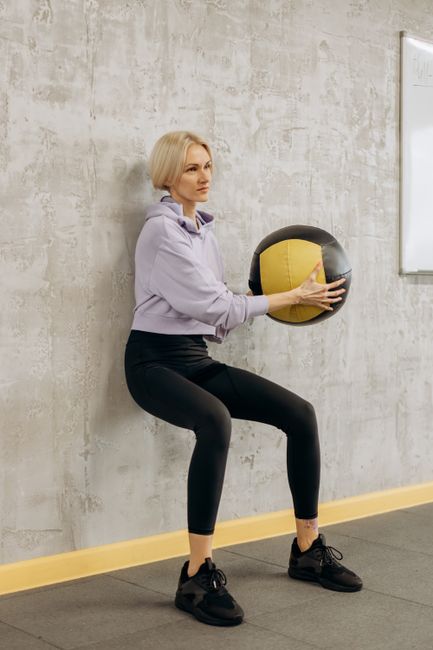
Why a wall beats most home gym purchases
The most underrated piece of exercise equipment in your home is holding up the roof. A wall provides three things every strength programme needs: an immovable surface to push against, a support that makes hard exercises safely easier, and instant feedback on your posture, because you can feel exactly which parts of your back are touching it. In a one-bedroom flat in Faridabad or a studio apartment in Chicago, it also solves the honest problem that treadmills and benches do not fit.
Muscle does not know whether resistance comes from a dumbbell or from your own body weight angled against brick; it responds to tension taken close to the edge of capacity and progressed over weeks. Every exercise below has a built-in way to make it harder, which is the ingredient most home routines quietly lack.
Wall sit: the thigh builder
Stand with your back flat against the wall, walk your feet out about forty-five centimetres (a foot and a half), and slide down until your knees bend somewhere between forty-five and ninety degrees — deeper is harder. Keep the whole spine and the back of your head in contact with the wall, weight through your heels, and hold. Begin with three holds of twenty seconds, resting a minute between, and build towards three holds of forty-five to sixty seconds before deepening the angle.
The burn belongs in the front of the thighs and should build gradually through the hold; sharp pain behind the kneecap means rise a few centimetres to a shallower angle. Never let the knees travel forward past the toes, and skip deep angles if you have significant kneecap pain — a shallow sit still trains the muscle.
Wall push-up: pressing strength at any level
Face the wall with palms flat at shoulder height, slightly wider than shoulders, and feet together a comfortable step back. Keeping your body rigid as one plank from head to heels, bend the elbows to bring your chest towards the wall over two seconds, then press back over two seconds. Start with two to three sets of ten to twelve; when a set of fifteen feels easy, walk the feet further from the wall, because a steeper body angle loads more of your weight onto the arms.
You should feel effort in the chest, shoulders and back of the arms, with the trunk working quietly to stay straight — a sagging waist or poking chin means the set has effectively ended. Wrists that ache on a flat palm can grip the frame of a doorway or push on fists instead.
Wall slides and angels: posture strength, not just stretch
Stand with your back against the wall, feet a little forward, and press your lower back gently towards the surface. Raise both arms into a goalpost shape with elbows and the backs of your hands touching the wall, then slowly slide the arms overhead as far as they go without anything losing contact, and draw them back down. Perform two to three sets of eight to ten slow repetitions. Most desk workers find their forearms peel away within a few repetitions — screen years have stolen exactly that gap.
The working feeling belongs between the shoulder blades and in the back of the shoulders, with a stretch across the chest; pinching on the point of the shoulder means shrink the range.
Single-leg wall press and heel raises: hips and calves
Stand side-on to the wall on one leg, lift the inside knee to hip height, and press that knee's outer side firmly into the wall, while the standing hip works to keep your pelvis level. Hold ten seconds at a strong effort, rest, and repeat five times per side. The deep burn arrives in the outer hip of the standing leg — the gluteus medius, the muscle that steadies every step you take.
Finish with heel raises using the wall as fingertip balance support: rise slowly onto the balls of both feet over two seconds, pause, and lower over three. Two to three sets of twelve to fifteen; progress to single-leg raises when doubles feel easy. Strong calves are shock absorbers for knees and hips on every stair and slope.
A twenty-minute weekly structure that actually progresses
Run the five exercises as a circuit — wall sit, wall push-up, wall slide, single-leg press, heel raises — resting thirty to sixty seconds between exercises, and complete the circuit two to three times. Done three or four days a week, that is roughly twenty minutes and covers thighs, hips, chest, shoulders, trunk and calves. Progress one variable at a time each week: a longer hold, a deeper angle, feet further from the wall, or two extra repetitions.
Track the numbers somewhere visible, because a written upward trend keeps home programmes alive past the first fortnight. When every progression here feels manageable, you are ready for floor push-ups, free squats and single-leg work — the wall will have done its job as a patient, rent-free trainer.
Who should modify, and when to stop
Wall work is among the safest strength training available, but sensible exceptions exist. Uncontrolled high blood pressure makes long isometric holds like the wall sit unwise, because static effort spikes pressure — keep holds under fifteen to twenty seconds, breathe throughout, and never strain; a doctor's clearance comes first. Recent surgery, significant osteoporosis, or a joint that swells after sessions all call for professional guidance on dosage. Stop any exercise that causes chest pain, unusual breathlessness, dizziness, or sharp joint pain, and seek medical advice — muscle burn that fades within a minute or two of resting is the only discomfort this routine should produce.
Questions patients ask
Can wall exercises really build strength, or just maintain it?
They build it, provided you keep progressing the difficulty — deeper wall sits, steeper push-up angles, longer holds. Beginners and returners typically gain noticeable strength within four to six weeks; advanced trainees will eventually need heavier options.
How many days a week should I do this routine?
Three to four non-consecutive days works well, giving muscles the rest day they use to actually rebuild. Daily light practice is fine too if you keep two harder days and let the others stay easy.
I live in a rented flat — will these exercises damage the wall?
No. Every exercise here uses steady pressure, not impact, and a painted brick or concrete wall is unaffected. Choose a smooth stretch of wall without frames or switches, and wipe hand marks off glossy paint.
Suggested articles
Walking vs Running: What Each Really Does to Your Joints
Running is not automatically bad for knees, and walking is not automatically enough. What impact really does to cartilage, and how to choose.
18 August 2026 · 4 min read
Resistance Bands for Beginners: A Full-Body Routine in Twenty Minutes
One rubber band, eight movements, twenty minutes: a beginner's full-body strength routine with clear sets, reps and form checks for every move.
18 August 2026 · 4 min read
Gentle Sciatica Stretches for Seniors: Relief Without Strain
Chair-based, bed-based sciatica stretches designed for older bodies — gentle on hips and balance, precise about what each stretch should feel like.
17 August 2026 · 4 min read