
Surya Namaskar as a Workout: Building Strength With Flow
MBM (Mind Body Motion) Physiotherapy · 16 June 2026 · 3 min read
One sequence, a full-body training effect
A single round of Surya Namaskar takes the body through a forward fold, a lunge, a plank, a controlled lowering, a backbend and a powerful hip hinge — which is most of the movement vocabulary a gym programme tries to cover with machines. Strength develops because several of these positions demand that muscles contract hard against body weight, and stamina develops because rounds are linked without rest. The variable that decides whether it is ritual or training is simply how you dose it: tempo, rounds and precision.
The three positions where the strength actually happens
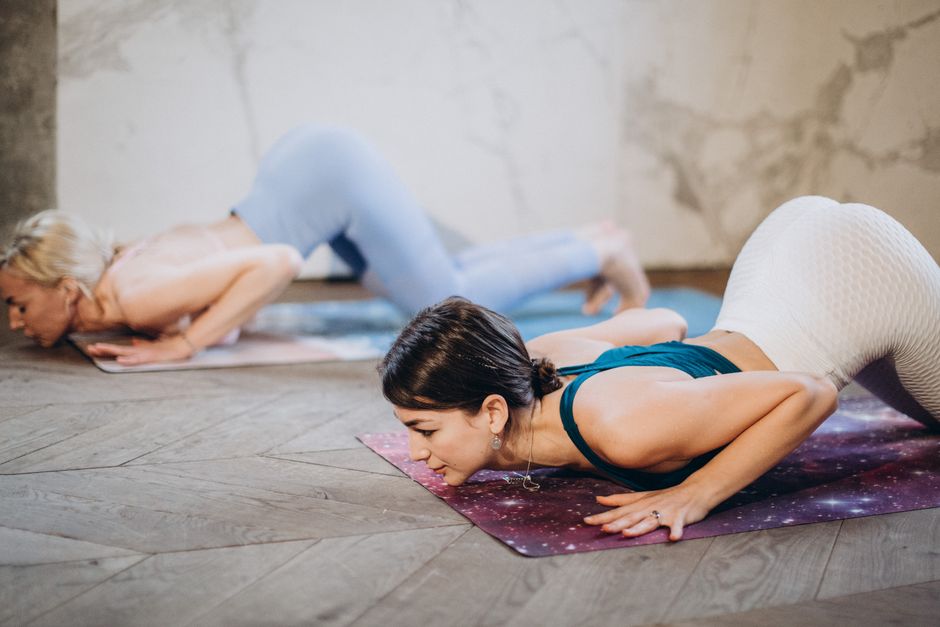
Most of the strengthening lives in three stations. The plank demands that your trunk hold a rigid line against gravity. The lowering into Chaturanga or knees-chest-chin builds pushing strength through chest, shoulders and triceps as they resist your descent — lowering slowly over three seconds multiplies the effect. The lunge loads the front thigh and buttock of the leading leg. Passing through these positions quickly wastes them; pausing one full breath in each turns the same sequence into resistance work.
The remaining stations are not wasted — the forward fold mobilises hamstrings and the deep lunge opens hip flexors shortened by desk hours — but they are mobility work rather than strength work. Knowing which station does which job lets you slow down exactly where your own goal lives.
Technique points that protect shoulders and back
In plank, hands sit under the shoulders, fingers spread, and the hips neither sag nor pike — imagine a straight rod from crown to heels. When lowering, elbows brush the ribs rather than flaring wide, which keeps the shoulder joint in a strong position; if you cannot control the descent, drop the knees first without any shame. In cobra, the chest lifts while the hips stay grounded and the lower back stays comfortable. Rushing these details is how a strengthening practice becomes a shoulder-pain referral.
Film yourself from the side once a week on a propped phone, because the sagging hip or flared elbow you cannot feel is usually obvious on screen. Ten seconds of footage corrects form faster than a hundred repetitions of guessing, and the weekly record doubles as proof of progress.
A four-week progression from six rounds to a real session
Week one: six slow rounds, one breath per movement, resting thirty seconds after every second round. Week two: eight rounds, holding plank and lunge for two breaths each. Week three: ten to twelve rounds, adding the slow three-second lowering. Week four: twelve rounds in blocks of four with minimal rest, finishing with a two-breath hold in every strength station of the final block. At that point most people are doing twenty-plus minutes of continuous resistance-and-cardio work — a legitimate session by any standard.
Hold the progression steady for an extra week whenever soreness lingers past two days or form frays before the final rounds. The schedule exists to serve the body, not the other way around, and a repeated week costs nothing against a shoulder strained by hurrying towards an arbitrary target.
What you should feel — and what you should not
Expect warm, burning effort in thighs, shoulders and abdominals, a raised heart rate that would make singing difficult, and next-day muscle soreness during the first two weeks. You should not feel sharp wrist pain, pinching at the front of the shoulder, or lower-back pain during backbends. Wrist discomfort usually responds to pressing firmly through the fingertips and knuckles rather than dumping weight into the heel of the hand; persistent joint pain in any station means modify that station, not abandon the practice.
Who should modify, and who should wait
Skip the jump-backs and keep the knees-down lowering if you are new to strength work, significantly overweight, or returning after a break. People with uncontrolled blood pressure should avoid holding the head-below-heart positions for long and should rise slowly from forward folds to prevent dizziness. Anyone with a recent disc problem, shoulder injury or wrist fracture should get individual clearance first, and pregnant women need a modified sequence from a qualified teacher. Fast flows on a cold body are the most common injury setting we see — warm up with two gentle rounds, always.
Making it a habit that survives busy weeks
Tie the practice to a fixed anchor — after brushing your teeth, before the kitchen becomes busy — because morning routines survive Indian household schedules better than evening ones. On days when time collapses, do four unhurried rounds rather than none, since the habit loop matters more than any single session's volume. Count rounds with a row of coins or a mala rather than a phone, which keeps the practice screen-free and the neck out of a downward stare between rounds.
Questions patients ask
How many rounds equal a proper workout?
With slow tempo and two-breath holds in the strength positions, ten to twelve rounds gives most adults a genuine strength-and-stamina session. Done fast and loose, even fifty rounds train very little strength.
Can Surya Namaskar help with weight management?
Continuous rounds raise heart rate and burn energy meaningfully, and the muscle you build raises resting energy use slightly. It supports weight goals best alongside sensible eating, not instead of it.
My wrists hurt in plank — should I stop?
First spread the fingers, grip the mat, and shift weight slightly forward of the wrist crease. If pain continues, work on fists or use push-up handles; persistent wrist pain deserves an assessment.
Suggested articles
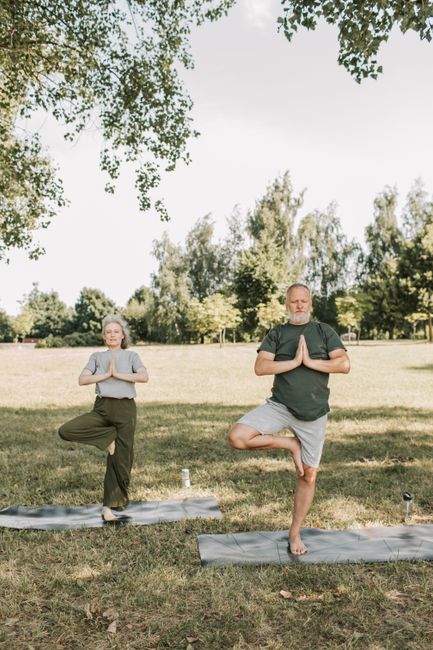
Balance Yoga for Seniors: Steadiness You Can Build at Any Age
Balance is trainable at any age. A supported yoga sequence for seniors — wall-side tree, mindful transfers, breath — that rebuilds steadiness.
20 August 2026 · 4 min read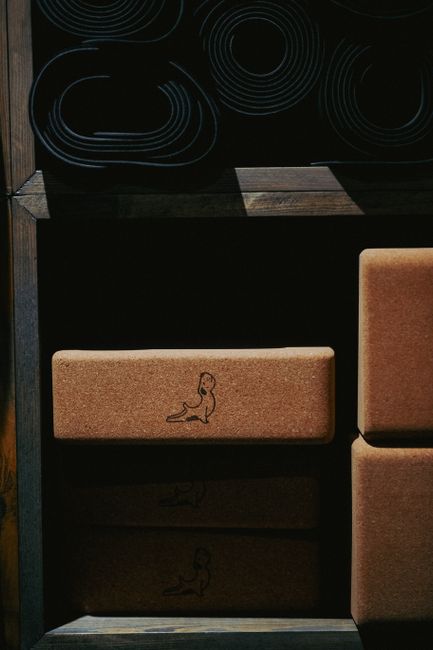
Yoga With Knee Pain: Modifying Practice Instead of Quitting It
Knee pain rarely means quitting yoga. How to modify kneeling, deep bends and standing poses with props and angles so practice strengthens.
20 August 2026 · 4 min read
Chair Yoga at Your Desk: Ten Moves Nobody Will Notice
Ten discreet chair yoga moves — breath-linked stretches and holds you can do in an open-plan office without leaving your seat or drawing stares.
19 August 2026 · 4 min read