
Yoga for Back Pain: Poses That Help and Poses to Skip
MBM (Mind Body Motion) Physiotherapy · 9 June 2026 · 3 min read
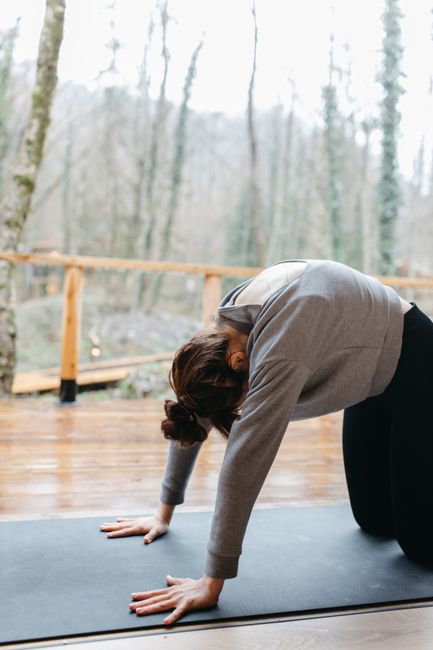
Why some poses soothe a sore back and others inflame it
A painful back is rarely damaged in any serious way, but it is sensitised — the muscles around the spine guard, and certain directions of movement provoke the guarding while others calm it. Gentle, rhythmic movement increases blood flow to stiff joints and tells the nervous system that motion is safe, which gradually dials the protection down. Aggressive end-range positions do the opposite, especially early on. The skill is matching the pose to what your spine currently tolerates, not to what the class around you is doing.
Cat-cow: the safest starting point for almost everyone
Come onto hands and knees, wrists under shoulders and knees under hips. Breathe in as you let the belly sink and the chest lift; breathe out as you round the back towards the ceiling and tuck the tailbone. Move slowly through eight to ten cycles, twice a day, staying well inside the range that feels comfortable. You should feel gentle gliding movement along the whole spine, not pain at one sharp point. This rhythmic flexion and extension pumps fluid through the spinal joints, which is why stiffness usually eases within a few cycles.
If even this range provokes pain, shrink the movement to a barely visible rocking and stay there for a week — the size of the motion matters far less than its rhythm. Most patients find the tolerated range expands on its own once the nervous system learns to trust the movement again.
Child's pose and knees-to-chest for a back that hates arching
If your pain flares when you stand long hours or arch backwards, flexion-based rest positions usually feel merciful. In Child's pose, kneel, sit the hips towards the heels and fold forward with arms stretched ahead, holding for thirty to sixty seconds while breathing into the back of the ribs. Lying knees-to-chest, hug both knees gently for twenty to thirty seconds, three or four rounds. Both positions open the spaces at the back of the spine and unload tired standing muscles. Skip them if bending forward is what triggers your leg pain.
Cobra and sphinx for a back that hates sitting
If your pain builds through long sitting on a chair or floor and eases when you walk, gentle extension often helps. Lie on your stomach and prop onto forearms in sphinx, holding one to two minutes while the lower back softens. Progress to a low cobra — palms under shoulders, pressing the chest up only as far as comfort allows, hips staying on the floor — for five to eight repetitions. You should feel pressure, stretch or nothing in the lower back; pain shooting into the buttock or leg means stop and get assessed.
The poses to skip while your back is irritable
Deep seated forward folds like Paschimottanasana, full wheel, standing toe touches with locked knees, and vigorous twisting flows put high leverage on irritated spinal tissue and are the most common class positions our patients name when describing a flare. Skip them until you have been pain-free for several weeks, then reintroduce them gradually with bent knees and shallow ranges. A pose is not therapeutic simply because it is difficult; during recovery, the modest poses do the healing.
Group classes deserve a particular word of caution, because the social pressure to keep pace with the room overrides body signals remarkably easily. Tell the instructor about your back before the class begins, and rest in Child's pose without apology whenever a pose is not for you that day.
Building a daily fifteen-minute sequence
A sensible daily order: cat-cow to warm up, then either the flexion pair or the extension pair depending on which direction your back prefers, followed by a gentle lying twist — knees dropping slowly side to side — and five minutes of slow breathing on your back. Practise at the time of day your back is loosest, often late morning rather than immediately after waking, when the discs are at their most swollen and forward bending feels worst. Consistency over intensity: the spine responds to daily gentle movement far better than to a weekly hard class.
When back pain needs a doctor before a mat
See a doctor promptly rather than starting yoga if your back pain comes with numbness in the groin or inner thighs, new difficulty controlling urine or stool, weakness in a foot, unexplained weight loss, fever, or constant night pain that does not change with position. Pain radiating below the knee with pins and needles deserves a physiotherapy assessment first, because the wrong direction of movement can worsen nerve irritation. For ordinary aching backs, though, the mat is one of the best places to be.
Questions patients ask
How soon after a back pain episode can I start yoga?
Gentle cat-cow and comfortable rest positions can usually begin within a few days, once you can move without sharp pain. Wait for the acute spasm to settle before adding held poses.
My pain goes down my leg — is yoga still safe?
Leg pain suggests nerve involvement, and pose choice then really matters. Get a physiotherapy assessment first; the wrong forward fold can aggravate it, while the right direction of movement often helps considerably.
Is a hot water bag before yoga a good idea?
Yes — ten minutes of warmth relaxes guarding muscles and makes gentle movement easier. Use it as preparation for movement rather than a substitute for it.
Suggested articles
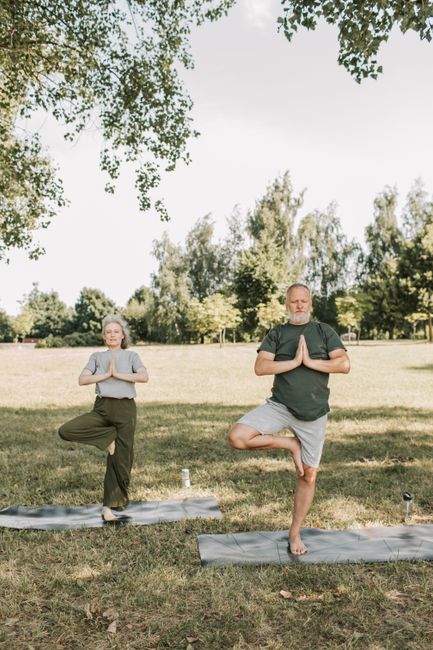
Balance Yoga for Seniors: Steadiness You Can Build at Any Age
Balance is trainable at any age. A supported yoga sequence for seniors — wall-side tree, mindful transfers, breath — that rebuilds steadiness.
20 August 2026 · 4 min read
Yoga With Knee Pain: Modifying Practice Instead of Quitting It
Knee pain rarely means quitting yoga. How to modify kneeling, deep bends and standing poses with props and angles so practice strengthens.
20 August 2026 · 4 min read
Chair Yoga at Your Desk: Ten Moves Nobody Will Notice
Ten discreet chair yoga moves — breath-linked stretches and holds you can do in an open-plan office without leaving your seat or drawing stares.
19 August 2026 · 4 min read