
Yoga for Posture: Opening the Chest, Waking the Back
MBM (Mind Body Motion) Physiotherapy · 18 June 2026 · 3 min read
The slump is a pattern, not a personality
Hours over laptops, phones and steering wheels shorten the chest muscles and lull the muscles between the shoulder blades into inactivity, until the rounded position starts to feel like home. Nothing is structurally broken in most slumped adults — the pattern is simply well-rehearsed. That is good news, because patterns retrain. Yoga suits this problem unusually well: it stretches the tightened front of the body while strengthening the sleepy back of it, and it does both within the same short practice.
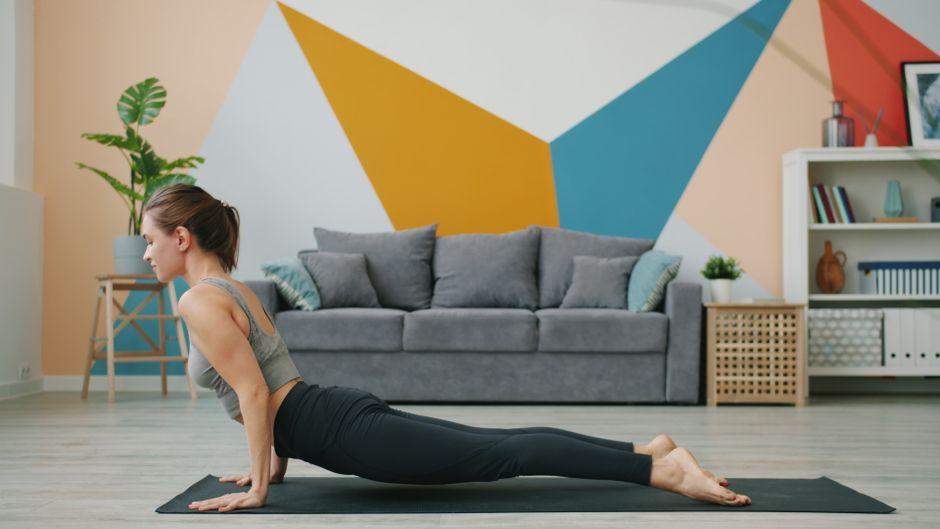
Cobra: teaching the back to lift itself
Lie on your stomach, palms under the shoulders, elbows tucked. Press the chest forward and up while the hips stay heavy on the floor, rising only as high as the lower back stays comfortable. Hold for three slow breaths, lower with control, and repeat five to eight times. The muscles along your spine and between your shoulder blades are doing the lifting — you should feel them working, not the arms doing all the pushing. Sharp lower-back pain means rise lower; this is a strengthening pose, not a contest of height.
Keep the gaze slightly forward and down rather than cranking the head up, because throwing the neck into full extension shifts effort away from the mid-back you are actually trying to train. The lift should feel spread along the whole spine, strongest between the shoulder blades.
Locust pose: the strengthener most slumped backs need
Still on your stomach, arms alongside the body with palms down, lift the chest, arms and (if comfortable) the legs a few centimetres off the floor, reaching the fingertips towards the feet and drawing the shoulder blades together. Hold five to eight seconds, rest, and build to eight repetitions. This pose directly trains the mid-back extensors and lower trapezius — precisely the muscles that hold the chest tall against gravity all day. Expect honest fatigue between the shoulder blades; skip it during a lower-back flare.
Opening the chest without straining the neck
For the tight front, use a supported fish pose: lie back over a rolled blanket placed along the spine, arms falling open to the sides, for one to three minutes of slow breathing while gravity stretches the chest and the front of the shoulders. A doorway stretch works similarly — forearm on the frame, elbow at shoulder height, gentle turn away, thirty seconds per side. In both, the stretch belongs across the chest and front shoulder; tingling into the hand means too much nerve tension, so reduce the angle.
Come out of the supported fish slowly, rolling to one side rather than sitting straight up, since the chest and front shoulders have just been lengthened and a sudden sit-up can send the loosened tissue into spasm. A quiet minute lying flat afterwards lets the new openness settle in.
The neck and head: the top of the chain
A rounded upper back pushes the head forward, and every centimetre forward multiplies the load the neck muscles carry. Finish your practice with gentle chin tucks: sitting tall, glide the chin straight back as though making a double chin, hold five seconds, repeat eight to ten times. You should feel effort deep in the front of the neck and a lengthening at the skull base. This small drill re-centres the head over the shoulders, which is the final storey of the postural building.
Do a few tucks at the desk itself whenever you catch your reflection slumping in the darkened monitor, because the exercise doubles as a posture reset. The movement is small enough that no colleague will notice, which removes the usual excuse for postponing it until evening.
A ten-minute daily sequence and when to do it
A workable daily order: cat-cow to warm up, cobra, locust, supported fish, then chin tucks — about ten minutes. Mid-evening works well for desk workers, unwinding the day's accumulated slump before it sets overnight. Pair the practice with one waking habit: each time you sit back down at your desk, take one tall breath and let the shoulder blades settle down and back. Posture changes through hundreds of small corrections, and the poses make those corrections physically easier to find.
When rounded posture needs more than yoga
See a clinician if your upper back is becoming rigidly curved rather than just habitually slumped — if you cannot straighten appreciably even when you try — or if postural change came with pain, height loss or age over sixty, when underlying vertebral changes such as osteoporotic compression need ruling out. Teenagers with a rapidly increasing curve, and anyone whose posture change follows trauma, should be assessed rather than exercised. For the everyday desk slump, though, eight consistent weeks of this sequence usually produces a visible, comfortable difference.
Questions patients ask
How long until my posture visibly improves?
Most people feel taller and less tight within two to three weeks, and family members typically notice the change around six to eight weeks of daily practice.
Can posture braces do the same job?
A brace holds you passively and your muscles switch off inside it, so gains vanish when it comes off. Strengthening poses build the holding capacity itself, which lasts.
Is a slumped posture actually harmful?
It is not dangerous in itself, but it concentrates load on the neck and mid-back and commonly feeds tension headaches and shoulder ache. Improving it reduces those complaints and improves breathing room.
Suggested articles
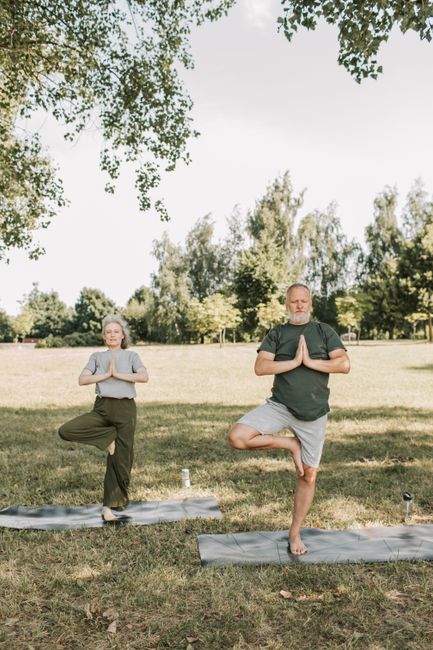
Balance Yoga for Seniors: Steadiness You Can Build at Any Age
Balance is trainable at any age. A supported yoga sequence for seniors — wall-side tree, mindful transfers, breath — that rebuilds steadiness.
20 August 2026 · 4 min read
Yoga With Knee Pain: Modifying Practice Instead of Quitting It
Knee pain rarely means quitting yoga. How to modify kneeling, deep bends and standing poses with props and angles so practice strengthens.
20 August 2026 · 4 min read
Chair Yoga at Your Desk: Ten Moves Nobody Will Notice
Ten discreet chair yoga moves — breath-linked stretches and holds you can do in an open-plan office without leaving your seat or drawing stares.
19 August 2026 · 4 min read