
Yoga for Sciatica: Poses That Decompress and Poses That Provoke
MBM (Mind Body Motion) Physiotherapy · 18 August 2026 · 4 min read
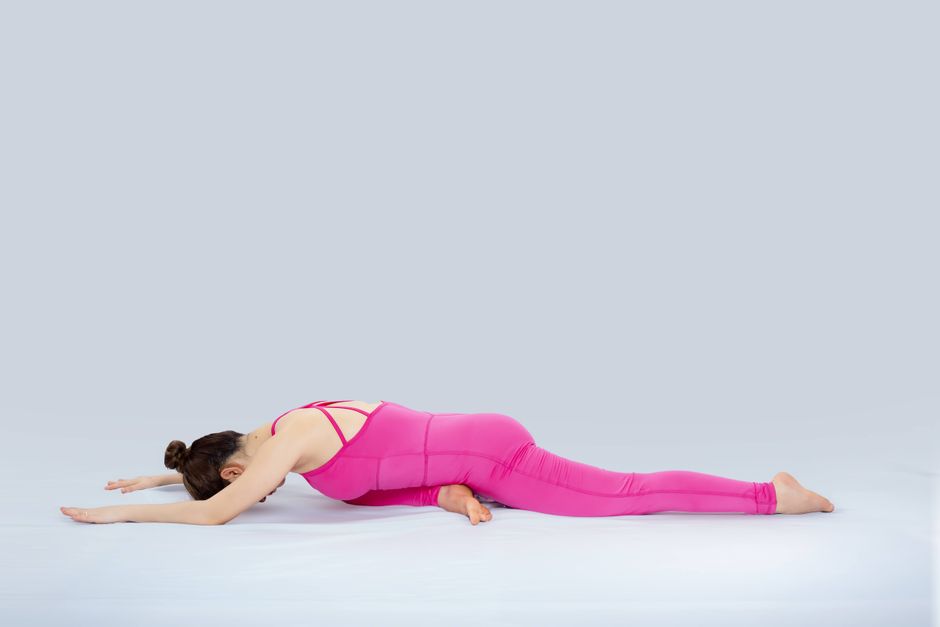
Two camps of poses, one irritated nerve
Sciatic nerve pain splits the yoga catalogue cleanly into two camps: poses that make space around the nerve and poses that stretch or compress it while it is already inflamed. The sciatic nerve runs from the lower spine through the deep buttock and down the back of the leg, so any pose that rounds the loaded spine deeply, yanks the hamstrings aggressively, or folds the hip under body weight can tension the nerve along that whole path. The same anatomy means poses that gently extend the spine, soften the deep buttock muscles, or unload the back often bring real relief.
Which camp helps you most depends on the source. Disc-related sciatica, common in younger adults, tends to hate loaded forward folds and favour gentle backbends; sciatica from a tight piriformis muscle clenching over the nerve responds to careful hip openers; and the stenosis pattern of later years often prefers knees-to-chest and forward-leaning shapes.
The one rule that overrides every pose name
In sciatica, pain that moves further down the leg during or after a pose — from buttock into thigh, thigh into calf — is a red signal regardless of how classical or recommended the pose is. Pain that retreats up towards the spine, even if the local backache briefly feels stronger, generally signals the nerve is being decompressed. This centralisation principle turns your own leg into the instructor.
Practise accordingly: enter each pose at half depth, wait three slow breaths, and ask where the sensation went. Deepen only if symptoms stayed put or moved up; back out smoothly if anything crept down the leg, tingled, or went numb. A flared nerve also dislikes long holds early on, so begin with twenty to thirty seconds in each shape.
Relieving pose one: sphinx, the gentle backbend
Lie on your belly and prop yourself on your forearms, elbows under shoulders, pelvis and thighs heavy on the floor, lower back soft rather than clenched. Sphinx (salamba bhujangasana) gently extends the lumbar spine, which for disc-pattern sciatica encourages the bulging material forward, away from the nerve root. Hold thirty to sixty seconds for three to five rounds, breathing slowly, and watch the leg: relief or retreat of symptoms means the shape suits you.
You should feel mild pressure or stretch across the lower back and nothing in the leg. If even this small arch pushes pain down the limb — as it can in stenosis-pattern sciatica of older age — abandon backbends for now and work from the knees-to-chest family instead. Skip sphinx in late pregnancy, obviously, since it requires lying on the belly.
Relieving poses two and three: reclined pigeon and knees-to-chest
Classical pigeon folds the hip under full body weight; the reclined version keeps the benefit and drops the risk. Lie on your back, cross the affected ankle over the opposite knee, thread your hands behind that thigh, and draw the legs gently towards your chest until the buttock stretches deeply. Hold thirty to sixty seconds, two to three rounds. The ache belongs in the buttock cheek; tingling in the foot means loosen the pull.
Knees-to-chest (apanasana) — both knees hugged softly towards the chest, rocking a centimetre side to side — gently opens the back of the spine and suits the older, stenosis-flavoured sciatic pattern especially well. Half a minute to a minute, repeated whenever the back tightens during practice. Between poses, rest in child's pose with knees wide, another shape that opens the nerve's exit corridors without loading them.
The provokers: folds, twists and postures to modify or shelve
Seated forward fold (paschimottanasana) and standing forward fold combine a rounded lumbar spine with maximal hamstring stretch — precisely the combination that tensions an inflamed sciatic nerve. Shelve them during a flare; later, reintroduce with generously bent knees and a long spine, hinging at the hips. Deep seated twists with the spine rounded, classical full pigeon, and boat pose's loaded flexion also belong on the caution list.
Downward dog sits in between: with straight knees it can drag on the nerve, but with knees soft and heels high it becomes a tolerable, even pleasant, spinal decompression for many. The pattern behind the whole list is consistent — protect the nerve from being simultaneously stretched and compressed until it calms.
Building a fifteen-minute daily sequence
A sensible flare-friendly sequence runs: three rounds of gentle cat-cow on hands and knees, five rounds of sphinx, reclined pigeon on each side, knees-to-chest, then a supported bridge — feet on the floor, hips lifted a hand-span and held for five breaths — finishing flat on the back with calves resting on a chair or bed for two to three minutes. That unloaded final position is where many people feel the leg quieten most.
Practise once daily, letting the leg's response — not depth of pose — measure progress. As symptoms centralise over the weeks, hamstring work returns first with a strap and a straight spine, then folds with bent knees, then the fuller catalogue; rushing that order is how recovered practitioners restart their own sciatica.
When yoga is the wrong tool for the moment
Stop practising and seek prompt medical care for numbness in the saddle area, new bladder or bowel difficulty, or a foot that weakens or drags — signs of severe nerve compression that no pose addresses. Sciatica with fever, unexplained weight loss, a cancer history, or pain unrelieved in any position needs a doctor before a mat. And if six weeks of modified practice leaves the leg pain unchanged or worsening, add a physiotherapy assessment; a nerve that refuses to settle deserves examination, imaging where indicated, and a wider plan than stretching alone.
Questions patients ask
Can yoga cure sciatica permanently?
Yoga can relieve pressure on the nerve, relax the guarding muscles and rebuild confident movement, which resolves many episodes. Whether relief lasts depends on the cause and on daily habits — sitting, lifting, strength — so think of yoga as a strong part of the plan rather than a one-time cure.
Is pigeon pose good or bad for sciatica?
The reclined version on your back is one of the best piriformis stretches for sciatic pain. The classical floor version loads the folded hip under body weight and commonly aggravates a flared nerve — save it for after recovery, if at all.
Should I do yoga during an acute sciatica flare?
Gentle shapes — sphinx, knees-to-chest, child's pose — are usually fine within pain limits and beat bed rest. Avoid deep folds, twists and long holds until the leg pain retreats upward, and stop anything that sends symptoms further down the limb.
Suggested articles
Balance Yoga for Seniors: Steadiness You Can Build at Any Age
Balance is trainable at any age. A supported yoga sequence for seniors — wall-side tree, mindful transfers, breath — that rebuilds steadiness.
20 August 2026 · 4 min read
Yoga With Knee Pain: Modifying Practice Instead of Quitting It
Knee pain rarely means quitting yoga. How to modify kneeling, deep bends and standing poses with props and angles so practice strengthens.
20 August 2026 · 4 min read
Chair Yoga at Your Desk: Ten Moves Nobody Will Notice
Ten discreet chair yoga moves — breath-linked stretches and holds you can do in an open-plan office without leaving your seat or drawing stares.
19 August 2026 · 4 min read